
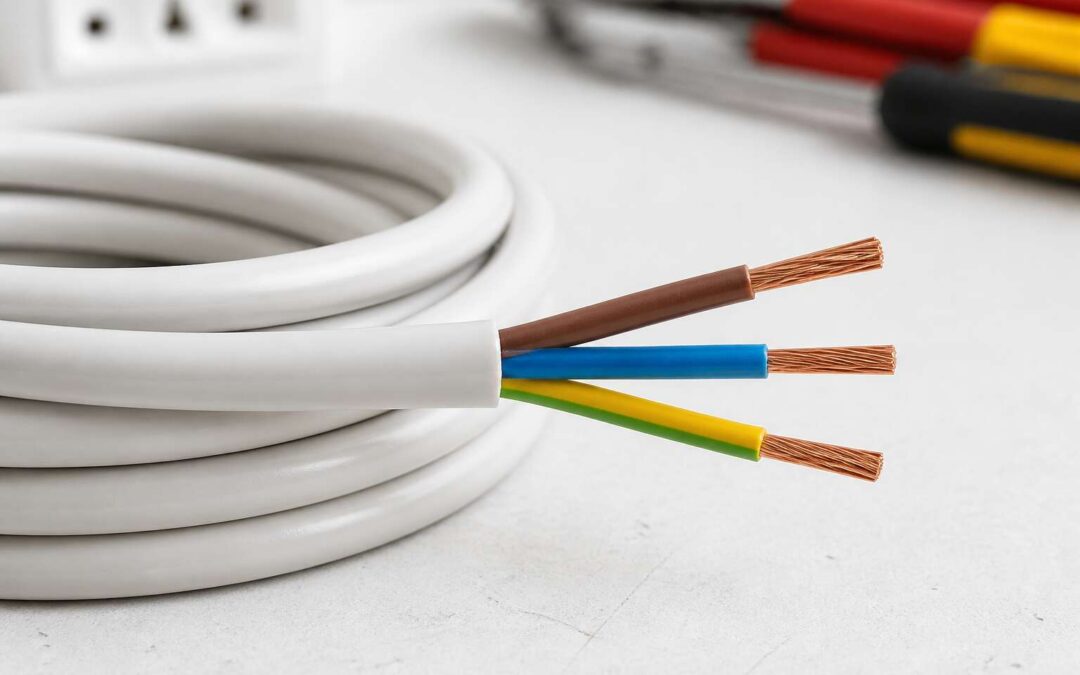
Understanding Three-Core 1.5mm² Cables
Statistically, a large share of residential electrical faults in South Africa come from mismatched cable sizes, so the right copper matters. The electrical cable 3 core 1.5 mm is the sensible choice for lighting circuits and low-current appliances. It carries live, neutral, and earth inside one sheath, and it does not pretend to be something bigger.
As an electrician once told me, this cable suits small circuits best. I have used it for:
- Ceiling light runs across a double-storey house
- Feeding a 15-amp socket on the veranda
- Wiring up a gate motor’s control panel
Load shedding is a South African reality, and voltage swings make correct sizing more critical. The electrical cable 3 core 1.5 mm is not a universal cure, but for its intended circuits, it is reliable. Do not overload it, or the insulation disagrees!
Applications and Uses for 1.5mm Three-Core Cable
The electrical cable 3 core 1.5 mm is the quiet workhorse of South African lighting installations. It carries live, neutral, and earth conductors in one sheath, which makes it indispensable for circuits requiring switching from multiple points. Without this cable, your corridor lights and staircase switches would be a nightmare to wire safely.
Common applications include:
– Two-way switching between separate entrances
– Intermediate switching for long hallways
– Wiring ceiling roses with looped live feeds
– Connecting light fixtures that demand a switched neutral
For most homes, this electrical cable 3 core 1.5 mm handles up to 10 amps without breaking a sweat. It suits standard bulbs and modern LED downlights with equal ease. Electricians trust its flexibility when a compact, future-proof option is needed for everyday residential work.
Technical Specifications and Performance
The electrical cable 3 core 1.5 mm is rated for 16 amps in standard South African conditions, yet its real performance depends on installation method. I have seen this same cable handle a lighting circuit for decades, but also fail early when clustered with too many others. The specifications tell a careful story.
Key technical parameters include:
- Conductor resistance: about 12.1 ohms per kilometre at 20°C
- Maximum operating temperature: 70°C for standard PVC insulation
- Voltage drop: roughly 10.5 mV per ampere per metre
That last figure matters for longer runs. A 30 metre circuit at 8 amps loses about 2.5 volts, which is acceptable for most applications. For a 3 core cable, the earth conductor adds tensile strength, but its cross section is equal to the phase and neutral. That balance affects fault protection and impedance.
In practice, the electrical cable 3 core 1.5 mm performs best when protected by a 15 amp breaker, not a 20 amp one! The insulation is rated for 600 volts in dry locations, though South African wiring rarely sees that. Heat builds quickly in roof spaces, so derating is not optional. Respect the limits and this cable will serve faithfully for years.
Installation Best Practices for Three-Core 1.5mm Cable
In the half-light of a Joburg substation, the electrical cable 3 core 1.5 mm hums a quiet warning. It carries current through three insulated conductors, but only if you treat it with reverence. Sloppy work here breeds heat, sparks, and eventual ruin.
When you run this cable, mind its bending radius. Forcing it around sharp corners fractures the copper strands, and fractured copper is a slow death. Secure it every 300 millimetres along vertical runs, using saddles that grip firmly without crushing the sheath. Then, before termination, follow a strict ritual:
- De-energise the circuit and verify zero voltage.
- Strip back the outer sheath exactly 40 millimetres, no more.
- Tighten each terminal to the torque specified for the device.
Rushing that sequence turns a straightforward installation into a liability. The electrical cable 3 core 1.5 mm tolerates no guesswork. Respect its limits, and it will serve you quietly for decades.
Choosing and Buying 1.5mm 3-Core Flexible Cable
Many DIY electrical failures trace back to a single mistake: undersized cable. When you choose an electrical cable 3 core 1.5 mm, you are selecting a conductor rated for roughly 15 amps in free air, though that figure drops inside trunking. A kettle, a geyser element, or a small workshop circuit all ask for this specification.
Buying flexible cable starts with the strand count. I check this first. Fine strands bend better, but they carry slightly less current than solid copper. The sheath should carry a SABS marking. Look for a true copper colour, not a copper-plated substitute. For extension leads and appliance repair, an electrical cable 3 core 1.5 mm offers the combination of flexibility and capacity you need.
Run length matters. Longer runs require thicker cable to prevent voltage drop. Repairing an appliance cord means matching the existing cable class exactly. The price difference between reputable brands and unknown imports is small, yet the safety margin is not.