
Why Observing Cable Condition Is Critical
Preventing Unexpected Downtime
An hour of unplanned stoppage at a Johannesburg processing plant costs more than the lost output. It cascades into contractual penalties, rescheduled logistics, and strained labour relations. A single degraded cable, hidden inside a conduit or buried under abrasive dust, can sever an entire process. Electrical cable observation turns a silent failure into a visible pattern.
Routine visual inspection catches the early warnings before they escalate. Heat stress, jacket distortion, and surface tracking announce themselves through small shifts in appearance. Missing these signs means waiting for the breaker to trip or, worse, the smell of burnt insulation.
Consider what a walk past the switchgear reveals:
– Glazed surfaces on insulation near terminations
– Fine fissures along bending points
– Discolouration from ozone exposure
These markers carry more meaning than any theoretical lifespan. Consistent observation builds a record of deterioration that lets maintenance act on facts. That separates a scheduled intervention from a crisis.
Addressing Safety and Fire Hazards
Every year, electrical faults ignite thousands of fires in South African workplaces, and most begin undetected inside cable runs. A broken strand, a loose lug, or a cracked sheath creates resistance, and resistance creates heat. Electrical cable observation interrupts this sequence by exposing these internal states before failure.
Regular walks through plant areas reveal the physical markers of danger. Blistered jackets, warped conduit, and faint scorch marks near supports are not maintenance trivia. They indicate that the cable has already exceeded its safe operating temperature. Without observation, that heat builds until insulation chars and flames take hold.
Pay attention to these fire hazard clues:
- Copper staining on insulation near terminations
- Melted plastic on adjacent cables
- Surface tracking lines that appear as fine blackened paths
The hidden nature of cabling amplifies the risk. Buried lines and roof voids conceal degradation until smoke reveals it. Observation converts that delay into early action, protecting people and property from fires that never had to start.
Extending the Lifespan of Cable Assets
In South Africa, electricity costs continue to rise, and the reliability of your power supply directly impacts your bottom line. While many businesses focus on load shedding schedules or backup systems, they often overlook a simple, cost-effective practice: regular electrical cable observation. This is not about sophisticated testing; it is about using your eyes to catch small issues before they become catastrophic failures.
Routine visual checks are your first defense against premature asset failure. Cables rarely fail without notice; they offer physical warnings. However, these signs are easy to miss if you do not know what to look for. Over time, heat, moisture, and mechanical stress degrade the protective jacket. When this happens, the cable is no longer safe. Your observation routine should focus on identifying these specific visual anomalies.
The Financial Case for Looking Closely
Replacing a long run of industrial cable is expensive. It involves not just the material cost but also downtime, labour, and potential damage to connected equipment. Conducting regular electrical cable observation is a fraction of that cost. You are effectively performing a health check on your electrical infrastructure. By identifying a blister or a crack early, you can schedule a repair during planned maintenance. You avoid the emergency call-out fee and the pressure of a production halt.
What Your Eyes Should Be Telling You
You do not need an infrared camera to spot the most common issues. A slow walk down a cable tray or through a plant floor reveals a lot. Look for physical damage caused by forklifts, workers stepping on cables, or rodents chewing on the insulation. Pay close attention to the points where cables bend or enter junction boxes. These are stress points where the sheath is most likely to split. Your routine should be systematic to ensure nothing is missed.
– Check for discolouration on the cable jacket.
– Look for cracks or hardening of the insulation material.
– Inspect for any signs of water ingress or corrosion at connection points.
– Note any areas where cables are rubbing against sharp edges.
Interpreting the Clues
When you notice a section of cable that feels hot to the touch without load, or you see a dark patch on the wall near a fuse board, pay attention. This is often the result of resistance. Loose connections or undersized cables generate heat. Over time, that heat oxidizes the metal and increases the resistance further. This vicious cycle is the primary cause of electrical fires.
If the cable jacket looks like it has melted or warped, the current is too high for the conductor size. If you see a white or grey powder around a connection, that is oxidation. This contaminant acts as an insulator, creating more heat. Through timely electrical cable observation, you can identify these hazards and correct them with a simple torque check or by replacing a short section, rather than dealing with a full system meltdown.
The Link to Asset Longevity
Your goal with any asset is to achieve its maximum design life. Cables are no different. A cable that is constantly overheated will age prematurely. The insulation becomes brittle and loses its dielectric strength. Eventually, it will short out. Consistent observation ensures that your cables operate within their thermal limits. This prevents insulation breakdown and extends the operational lifespan.
Furthermore, documenting what you see during these walks is important. Keep a log of the date, location, and condition. If you notice the same issue recurring in the same spot, it suggests a deeper problem, such as vibration from a motor or a chemical leak in that area. This data turns a simple walk-around into a predictive maintenance strategy. It is a proactive approach that stops small cosmetic issues from turning into major capital expenditure. In a high-stakes environment like South African industry, where every rand counts, leveraging simple observation to protect your electrical assets is a smart, practical move.
Meeting Compliance and Insurance Standards
Meeting compliance standards is not merely a bureaucratic exercise. In South Africa, insurance policies and occupational health regulations are increasingly demanding verifiable proof of asset care. A claim following an electrical failure can be rejected if routine maintenance logs are absent. Your documented history of electrical cable observation serves as evidence that you fulfilled your duty of care. It transforms a subjective argument into an objective record.
The cost of non-compliance is steep. Fines can be levied, but the more significant loss is often the insurance payout. If a fire originates from a corroded connection, and you cannot demonstrate that you inspected that connection, the liability falls squarely on your business. Regular observation is the most affordable premium you can pay for risk mitigation. It provides the paper trail that auditors and assessors demand.
A systemized approach is critical. It is insufficient to have a vague memory of walking the plant floor last month. Your log should include dates, locations, and the specific condition of the jacket and terminations. This turns a casual glance into a defensible safety protocol. When the assessor asks for your maintenance schedule, you can present a clear, chronological account that proves your infrastructure was not neglected.
Modern Techniques for Cable Inspection
Visual and Thermal Scanning Methods
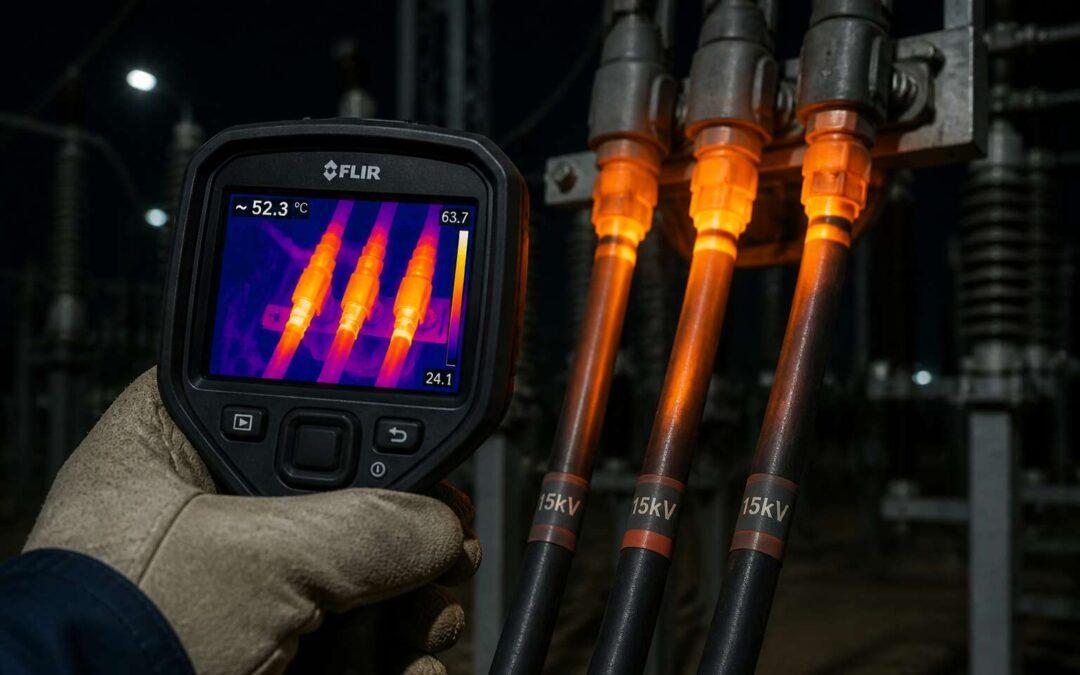
A loose connection can run 30 degrees hotter than the cable beside it. That gap is invisible to the eye but obvious to an infrared camera. Modern electrical cable observation pairs visual checks with thermal scanning to catch these faults before they escalate.
Visual inspection covers the surface; cracked sheathing, corroded lugs, signs of tracking or discolouration. These walks are quick and cheap, but they miss what happens inside the conductor.
Thermal scanning reads the heat signature of every joint under load. That data exposes a range of problems.
- High resistance connections wasting energy
- Unbalanced phases creating hot spots
- Deteriorating insulation nearing failure
This pairing is practical for reliable electrical cable observation, especially in South Africa, where ageing cables carry heavy loads between load shedding cycles. It gives us a complete view while the system stays live!
Using Time Domain Reflectometry for Fault Detection
Time domain reflectometry enhances electrical cable observation by sending a pulse along a conductor and measuring the reflection. The time delay pinpoints the fault distance with meter-level accuracy. I have located breaks in buried ducts and concrete-encased conduits without breaking ground.
A clean trace shows a normal cable. A distinct reflection indicates an impedance change, usually from moisture ingress, corroded joints, or a crushed section. The waveform reveals the nature of the fault.
For electrical cable observation, TDR complements thermal scanning by going beyond surface heat. It works while the cable is isolated, which suits planned maintenance windows. The equipment is portable and supports PILC, XLPE, and PVC insulation.
Common fault signatures include:
- Open circuit reflections
- Short circuit dips
- Water tree degradation in polyethylene
- Poor splice connections
These findings guide repair crews to the exact metre, reducing excavation time. TDR gives us a precise profile of the cable’s condition.
Partial Discharge Testing for High-Voltage Systems
Partial discharge testing reveals the hidden erosion occurring inside high-voltage insulation. These minute electrical sparks, invisible to thermal cameras, degrade XLPE and PILC from within. A single discharge lasts nanoseconds, yet its cumulative effect can transform a sound cable into a latent fault.
Using oscillating wave test systems, we apply a temporary AC stress to the conductor while sensors capture the characteristic pulses. The discharge pattern, its phase and magnitude, indicates whether voids, delamination, or contamination are present. This approach identifies weak points before they progress to failure.
- Inception voltage, where discharge activity begins
- Discharge magnitude, expressed in picocoulombs
- Time-resolved patterns, revealing the defect type
For electrical cable observation, partial discharge testing adds a prognostic dimension that other methods cannot match. It quantifies the degradation rate, allowing condition-based maintenance with real certainty.
Insulation Resistance and Continuity Measurements
A single insulation resistance reading can expose degradation that thermal imaging cannot detect. Continuity measurements verify the conductor path. Together, they form the basis of electrical cable observation. I have seen a 500 volt megger reveal moisture ingress that infrared scanning missed. The readings are simple, yet they carry deep meaning. A drop in resistance signals degradation. A continuity break indicates physical severance. For South African installations, where heat and humidity accelerate aging, these tests are indispensable. They require no complex setup and deliver results in minutes!
Key parameters include:
- Insulation resistance in megohms
- Polarization index, comparing one and ten minute readings
- Continuity resistance in ohms
Each value reveals the cable’s present state. Comparing readings across seasons predicts failure windows. This is electrical cable observation at its most direct.
Comparing Online and Offline Monitoring Approaches
Key Signs of Cable Degradation
Recognizing Physical Damage and Wear
Electrical cable observation reveals what most inspections miss. I have seen cables that looked whole from a distance, yet their insulation crumbled at a touch. The process demands attention to subtle changes in material condition.
- Surface cracks following the conductor’s curve
- Brittle sections that flake away
- Discoloration from sustained thermal stress
Physical wear often hides near clamps, bends, and entry points. A swollen jacket or a faint powdery residue signals chemical breakdown. In South Africa’s harsh sun, UV degradation accelerates this decay. You must look for the unnatural, the slightly misshapen, the oddly glossy patch. These are the first signs of failure, and they never lie!
Detecting Insulation Breakdown Early
Insulation breakdown is the stealthiest cable failure mode. Unlike cuts or abrasions, which are obvious, it begins at a molecular level. The first clue may be a faint bloom of white powder around a clamp, or a section of insulation that holds a distorted shape after bending. These are not blemishes; they signal chemical disintegration. If ignored, dielectric strength deteriorates, inviting leakage currents, then arcing, then fire. In South Africa, heat and coastal salt air accelerate the process.
Therefore, electrical cable observation demands more than a glance. Run your fingers along sheaths, sniff for odours, note changes in gloss or texture. Examine flexible sections under tension; incipient cracks reveal themselves then.
- Discoloured bands near termination points resistant to cleaning
- A sour, burnt smell from sealed junction boxes
- Finger pressure leaves indentations that slowly rebound
Such indicators warn that protective layers are failing; regular electrical cable observation prevents catastrophic failure!
Connector and Joint Failure Indicators
Connectors and joints are where cables go to betray you. A terminal that once clamped firmly now wobbles. The signs are subtle but specific.
Look for green crust on copper terminals, a fine dust that appears despite sealed enclosures. Heat damage shows as discoloured metal, often near the lug. A joint that runs warm to the touch after light load deserves suspicion, not a shrug.
- Intermittent tripping under identical loads
- Cracked or melted insulation right at the crimp
- Screw heads that refuse to tighten, they spin freely
These indicators matter for electrical cable observation. In South Africa, high ambient temperatures and salty coastal air accelerate corrosion at connection points, turning a minor resistance spike into a molten mess.
Impact of Environmental Stress Factors
Electrical cable observation turns morbid when you begin reading the pathologies of insulation and sheath. A jacket that once flexed now resists with brittle stiffness. Surface cracks appear as lines, usually on the sunward side of the run. These are entry points for moisture that travels along the conductor.
South Africa’s environment accelerates this decay. Ultraviolet radiation breaks down polymer chains, leaving the sheath chalky and fragile. Thermal cycling between scorching days and cold nights splits the material. Coastal humidity and industrial fumes soften compounds and wash away protective oils.
Key signs to record:
- Chalky residue on the outer jacket
- Hardening or deformation under pressure
- A network of microcracks on the surface
- Swelling or discolouration along the run
Heat anneals the copper conductor, making it brittle and prone to fracture under vibration. Oxidised strands increase resistance until a healthy circuit becomes a smouldering hazard. Environmental stress works quietly, and only disciplined electrical cable observation reveals its progress before the cable betrays the system.
How to Build a Cable Observation Routine
Defining Inspection Frequencies by Risk Level
Routine is the quiet art of noticing trouble before it becomes a spectacle. In South African plants, where uptime is precious, electrical cable observation demands a schedule calibrated to consequence, not calendar convenience.
I build my routine around risk levels:
- High risk cables, those carrying critical loads or in harsh environments, get a weekly glance.
- Medium risk cables, moderately stressed, earn a monthly look.
- Low risk cables, sheltered and lightly loaded, can wait a quarter.
Pair these frequencies with shift handovers, and no one shrugs ownership. This is not elaborate, it is deliberate. A cable that fails tomorrow shows warning signs today. Observation captures them in time!
Selecting the Right Tools for Different Cable Types
Building an electrical cable observation routine starts with knowing which cables actually matter. In a typical South African plant, a simple register of cable routes sorted by criticality saves hours of wasted inspection. The routine becomes a function of access and tooling, not guesswork.
Tool selection follows cable type. For exposed overhead runs, a thermal camera catches loose connections quickly. For buried cables, a ground penetrating radar unit locates physical damage without excavation. Inside cable trays, a handheld thermal imager and a decent flashlight remain the workhorses. I always carry a notepad to log anomalies on the spot, because memory is the weakest link in any routine.
A basic toolkit for most sites:
– Thermal imaging camera
– Insulation resistance tester
– Earth clamp meter
– Inspection mirror for tight spaces
Match the tool to the cable. A low voltage PVC cable needs different attention than a high voltage XLPE cable. This type of electrical cable observation works best when the tools fit the risk.
Documenting Findings and Tracking Trends
Documentation turns observations into intelligence. A written record of electrical cable observation, dated and filed, builds a reference that outlives memory. Track thermal patterns, resistance values, and physical signs of stress. Over months, shifts emerge.
Store data where you can review it. Spreadsheets work. So does dedicated CMMS software. The tool matters less than consistency. Each entry should note location, date, weather, and load at time of reading.
A practical electrical cable observation log includes:
- Date and time of inspection
- Ambient temperature and humidity
- Baseline and current measurements
- Photographs or thermal images
Review logs quarterly. Compare against baselines. Trending catches deterioration before failure.
Training Maintenance Teams on Observation Protocols
A cable that fails quietly spends weeks warning those who look. Make observation a reflex, not a chore. Build a routine where every shift starts with the same walk, the same sequence, the same questions. In South Africa, where load shedding and heat cycles strain infrastructure, a disciplined eye catches trouble early.
Training maintenance teams on observation protocols means teaching them what to notice and what to ignore. A burnt smell, a humming pitch change, a slight discolouration on the sheath. Electrical cable observation works best when collaborative, and rotating team members across sites sharpens instincts.
- Fix inspection times to the shift clock, no exceptions
- Pair experienced hands with newer staff each week
- Log anomalies immediately, never from memory
Routine turns silence into information. Electrical cable observation must be habitual and never skipped. The cables are speaking; your team just needs ears.
Integrating Inspections with Predictive Maintenance
Every cable has a signature hum, a thermal rhythm, a scent. In South Africa, where load shedding twists voltage and heat through the sheath, that signature changes before failure. Electrical cable observation catches the change. Link what you see to data your monitors already gather. A warm spot on a joint means little alone; compare it to yesterday’s load curve and it becomes a warning.
Build the routine around a single question: what does this cable look like when it is healthy? Walk the same route, scan the same joints, and overlay every observation with predictive maintenance readings. When a thermal scan flags a rise, your eyes confirm whether the sheath is cracked or merely warm. This integration turns inspection into data. Electrical cable observation links human senses to machine data. The cable warns weeks ahead; your routine just has to listen.
Real-World Examples from Industrial Facilities
At a Durban chemical plant, the electrical cable observation routine begins at the same hour each morning. The electrician walks the cable trays with a handheld thermal camera and a notebook. He knows every joint by name. One Tuesday, a cable near the chlorine hall reads three degrees warmer than its baseline. He marks it. By Friday, the reading climbs again. The maintenance planner schedules a replacement during the weekend shutdown. The cable never fails!
A steel mill in Vanderbijlpark photographs every termination monthly, building a visual archive that predates their monitoring software. When partial discharge alarms sound, the photographs confirm whether the discolouration is new or historic. This is electrical cable observation as institutional memory.
The routines that hold up share a few features:
- Fixed routes with numbered observation points
- The same hour each day for consistent thermal baselines
- Direct comparison between visual findings and alarm logs