
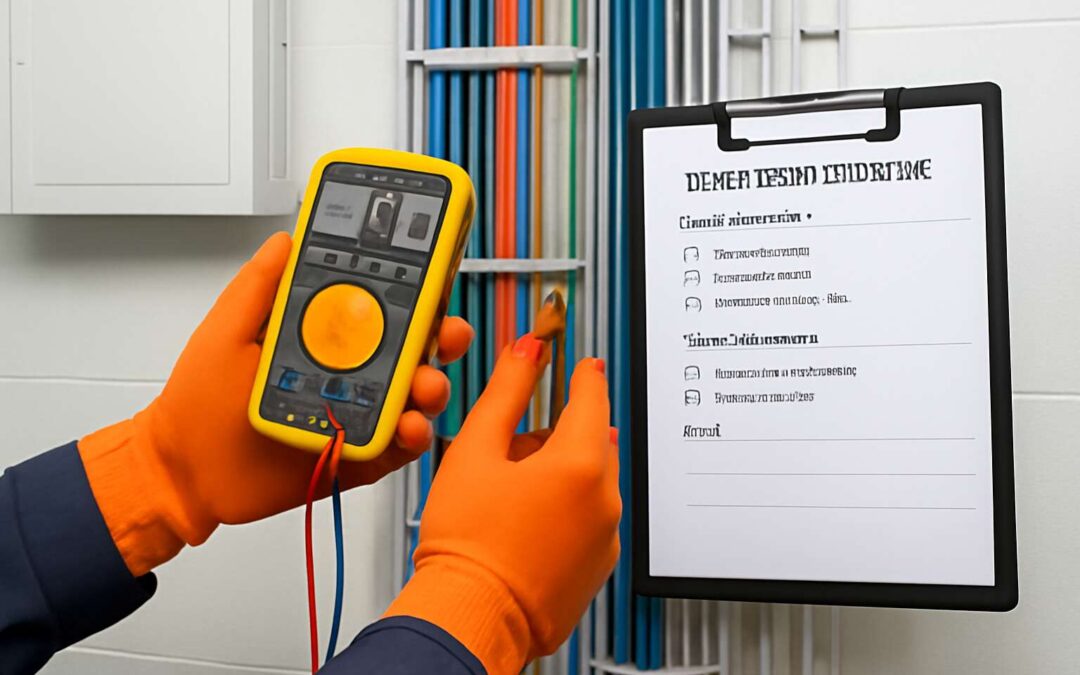
Cable Condition and Visual Inspection
Visual inspection of insulation and jacket
Across South Africa’s electrical networks, cables whisper warnings long before a fault erupts. A careful glance at insulation health reveals aging souls within the sheath, quiet and persistent. The electrical cable inspection checklist acts as a shield, turning subtle signs into clear, actionable insight—no mystification, just sound judgment.
Visual inspection of insulation and jacket unfolds as a narrative told in texture, color, and temperature. Indicators may include cracks and splits, blistered sheathing, heat marks, or discoloration along the jacket. Look for moisture staining, softness, or stiffness that betrays deterioration.
- Cracks or splits in insulation
- Discoloration or chalky residues
- Bulging or softened jacket
- Moisture staining or damp areas
In South Africa, these cues support the maintenance of equipment, safety, and uptime, sustaining resilience in the power delivery network.
Signs of abrasion, cracking, and discoloration
A tiny crack in the sheath can derail a grid; in South Africa, downtime costs more than rand. Cable condition is essential health, not cosmetic detail. The electrical cable inspection checklist guides crews from warning signs to fixes without guesswork.
Signs of trouble include:
- Abrasion along the jacket where contact or bending has worn the surface
- Cracks that creep across the sheath
- Discoloration that betrays heat exposure or chemical attack
Addressing these cues early protects uptime and safety for SA networks.
Indicators of heat damage and melting
In South Africa, even a short outage can ripple through production lines and cost millions. Cable health is essential, not cosmetic, and the electrical cable inspection checklist helps teams spot trouble before it erupts. Heat, aging, and overload leave telltale marks.
Heat damage and melting show as softened insulation, a glossy or warped jacket, and patches that look deformed. The surface may feel tacky, and a sour odor can accompany overheating—a telling cue that a cable is near failure.
Watch for these indicators during a careful visual scan:
- Softened insulation near terminations or along the length
- Warped, shiny, or melted jacket surfaces
- Char marks or burnt odor indicating overheating and insulation compromise
Each cue underscores why vigilance matters for uptime and safety across SA networks.
Evidence of physical damage and wear
Across South Africa’s industrial landscape, a single outage can ripple through production lines and cost millions. Cable condition is the quiet backbone of uptime, not a cosmetic detail. The electrical cable inspection checklist helps teams spot wear before it erupts, turning aging into a tale of resilience. In a flicker of light, you might glimpse the telltale signs—slack terminations, a bowing jacket, or a connector that resists seating.
- Loose or corroded terminations at joints
- Crushed, kinked, or flattened cable runs in trays and conduits
- Frayed outer sheath with exposed strands near bends
- Moisture staining or corrosion along metal fittings
Beyond the obvious signs, quiet wear shows up as misaligned clamps, softened jackets near bends, and corrosion where metal grip points bite into insulation. These cues accumulate with years of service and demanding environments, painting a story your inspectors can read at a glance.
Proper labeling and cable identification during inspection
In the dim corridors of South Africa’s industrial spaces, cable condition reads like a quiet omen. The electrical network speaks in whispers of wear, and the electrical cable inspection checklist treats labeling as the compass that keeps power flowing. I walk the routes, listening for slack, warmth, or subtle bowing in the jackets.
Proper labeling and cable identification during inspection is discipline itself—clear IDs prevent downtime and miswiring. Use durable tags, color codes, and barcodes that survive heat and moisture. Record circuit IDs, locations, and dates on both sleeve and log.
- Durable labels with weatherproof ink
- Color coding matched to the plant map
- Date, circuit ID, and technician initials
- Accessible placement near readable faces
The ritual is simple yet ironclad: where labeling is precise, the dark corners reveal their secrets in time, and uptime remains unbroken.
Electrical Continuity and Integrity
Conductor integrity and insulation resistance testing
Across South Africa’s towns and quiet farms, a steadfast electrical network keeps evenings warm and mornings productive. A recent statistic hints that cable faults underpin outages in rural installations. This section on Electrical Continuity and Integrity highlights how a healthy conductor path preserves safety and reliability.
Conductor integrity and insulation resistance testing go beyond looks. A healthy path has no hidden breaks, and insulation resistance confirms the coating resists moisture and contaminants. When tests flag weakness, you sense it in dimmed lights and stubborn circuits before a fault report arrives.
- Continuity tests help confirm an unbroken electrical path through the run
- Insulation resistance tests measure leakage and detect moisture or contamination
- Conductor integrity checks reveal hidden fractures or loose terminations that threaten reliability
This approach feeds the electrical cable inspection checklist, weaving steady power into everyday life with care.
Grounding and bonding verification
Even the gentlest South African dusk can go dark when a stray fault hides in the earth. Up to 20% of rural outages are traced to hidden continuity and bonding faults, and the lesson is plain: grounding matters more than a decorative plaque. This segment sits within the electrical cable inspection checklist, a quiet nod to professionalism that keeps switchgear dignified and reliable.
- Continuity of the grounding path across runs
- Bonding across enclosures, conduits and metalwork
- Verification of low-impedance bonding networks
Grounding and bonding verification isn’t about flair; it’s about ensuring that equipment enclosures, conduits, and frames share a single reference point. When the path is coherent, fault currents dissipate safely, and the network preserves life and assets. In practice, this is a staple note in the electrical cable inspection checklist.
Termination and splice continuity checks
Estimates suggest up to 15% of faults sneak in under the wire at termination points, where a loose lug or a brittle splice can blink open circuits faster than a social scandal at a Durban dinner party. It belongs in the electrical cable inspection checklist to catch such mischief before a load momentarily becomes a prop in a power outage, not a headline.
Termination and splice continuity checks are the quiet guardians of reliability, ensuring each connection behaves as a single copper thread rather than a tangle of excuses.
- Terminal seating and conductor alignment
- Crimp, lug, or solder quality and correct torque
- Moisture sealing and insulation over splices
When these joints pass muster, the network maintains impedance and reduces reflections, keeping switchgear dignified as a quiet, dependable companion.
Resistance measurement standards and acceptable values
Power faults slip in where cable meets termination—South Africa sees up to 12% of unplanned outages start there. In the electrical cable inspection checklist, continuity and integrity measurements set the tone for reliability, turning fragile links into steady copper lifelines.
Standards guide acceptable values. Continuity resistance should mirror the conductor’s gauge and length and stay low, within the manufacturer’s specification. Insulation resistance belongs in the megohm range, with a common rule of thumb being at least 1 MΩ per kV of rated voltage. Impedance stability is also expected across typical operating temperatures and humidity.
- Continuity resistance: low and within the conductor’s expected resistance per length
- Insulation resistance: megohms range, at least 1 MΩ per kV
- Impedance stability: minimal variation with heat and moisture
When these criteria hold, the electrical cable inspection checklist paints a picture of confident connectivity, and the network remains a dependable partner to switchgear and loads.
Testing tools, safety practices, and lockout/tagout basics
Across South Africa’s aging grid, a single weak link can ignite days of outages. In the realm of reliability, electrical continuity and integrity testing come into sharp relief within the electrical cable inspection checklist, turning fragile connections into steady copper lifelines.
- Multimeter for continuity and basic resistance checks
- Megohmmeter (insulation resistance tester) for insulation condition
- Clamp meter for assessing current envelopes and impedance behavior
- Proper test cables and adapters rated for the installation
Safety practices form the backbone: lockout/tagout basics, energy isolation, and clear tagging create a culture where energized surprises are minimized. Visible signage, authorized access, and routine verification keep reliability intact. In practice, this is a core element of the electrical cable inspection checklist.
Compliance, Codes, and Documentation
Relevant codes and standards for different environments
Compliance isn’t optional; behind every cable trail lies a ledger of standards. The electrical cable inspection checklist is more than a gauge of watts—it’s a pact with safety and accountability. In South Africa, alignment with SANS 10142-1 anchors every inspection, guaranteeing installations meet local expectations and elevate professional credibility!
Environment-specific codes guide what counts as compliant in different spaces:
- SANS 10142-1 for low-voltage installations and wiring practices in buildings.
- IEC 60079 for electrical equipment in explosive or hazardous atmospheres (mining, chemical plants).
- IEC 60529 for enclosure protection and ingress when outdoor or dusty conditions prevail.
- IEC 60364 series governing electrical installations in buildings and facilities, adapted by local standards in South Africa.
Documentation and record-keeping ensure traceability and accountability. Certificates of compliance, test reports, and maintenance logs tell the story of every installation’s lifeline. That archive is the shield you present when the checklist comes under scrutiny by clients and regulators.
Permit, inspection records, and reporting requirements
Compliance isn’t optional; behind every cable trail lies a ledger of standards. In South Africa, aligning the electrical cable inspection checklist with SANS 10142-1 anchors every inspection and boosts professional credibility. Codes such as IEC 60079 and IEC 60529 guide the context, reminding us that safety is a system, not a momentary check.
Documentation and record-keeping ensure traceability. Permit, inspection records, and comprehensive reporting are the lifelines you carry into audits. Consider these essentials in your documentation portfolio:
- Certificates of compliance
- Test reports
- Maintenance logs
- Inspection permits and regulatory reports
Tied together, they form a transparent audit trail that strengthens client confidence and regulatory alignment, underscoring the purpose of the electrical cable inspection checklist.
Tagging, labeling, and identification best practices
Tagging is the quiet compass guiding every cable run. Across SA sites, mislabelled conduits contribute to costly rework in complex electrical installs. An effective electrical cable inspection checklist keeps this compass true, weaving compliance, codes, and documentation tagging into a single, reliable map!
Codes and labeling are not afterthoughts—they are the framework. Align with SANS 10142-1 and let color coding, unique IDs, and durable labels form a coherent identification system.
- Durable, weather-resistant labels
- Clear, unambiguous asset IDs
- Consistent color coding
- Date and version stamps on labels
- Location and circuit reference
Documentation is the narrative that survives audits. When tagging creates a traceable trail, clients feel assured and regulators nod in approval. The tagging and identification framework feeds the broader documentation portfolio and supports the safety narrative, proving that safety is designed into the fabric, not hurried through!
Risk assessment, PPE and safety compliance
One mislabeled conduit can derail a project for days—the cost I’ve seen haunt SA sites at dusk. Compliance is the quiet gravity, directing risk assessment, PPE discipline, and a culture where safety is inevitable rather than improvised.
The electrical cable inspection checklist anchors practice, aligning teams with the law and building a narrative of care. PPE essentials:
- Hard hat
- SA-approved eye protection
- Insulated arc-rated gloves
- Flame‑resistant coveralls
- Safety boots with slip resistance
- Lockout/tagout devices
Documentation risk is not folklore; it is evidence. Permit-to-work, training records, and audit trails render compliance tangible, guiding how we record, report, and reflect on every cable run.
In this theatre of cables, the quiet ledger of labels, dates, and sign-offs keeps the current flowing and the shadows at bay.
Repair prioritization, lifecycle planning, and replacement recommendations
A single mislabeled conduit can derail a project at dusk; in South Africa, the cost of rework haunts sites long after the lights come on. The electrical cable inspection checklist anchors compliance, turning vigilance into practice and preserving momentum.
Codes and safety standards guide decisions while repair triage and lifecycle calendaring, along with replacement recommendations, keep assets resilient.
- Repair triage guided by critical load, exposure, and downtime impact
- Lifecycle calendaring that aligns replacements with maintenance budgets and asset registers
- Replacement recommendations informed by condition data, manufacturer guidance, and climate considerations
In this discipline’s archive, traceable decisions sustain reliability and safety on South African work sites.
Installation Practices and Routing
Cable routing through supports, trays, and conduits
Routing through supports, trays, and conduits is where order becomes a shield against catastrophe. The electrical cable inspection checklist reminds readers that neat, unobstructed runs reduce heat buildup and misconnection risk. In South African plants, where ambient heat and crowded spaces test resilience, routing choices echo in performance.
A concise spine of considerations guides the eye and hand:
- Secure alignment with supports to prevent movement under vibration or bending
- Maintain clear separation from heat sources and mechanical hazards
- Use dedicated trays or conduits to avoid cross-routing and interference
As one walks the plant corridors, the sigh of cables settling into their allotted spaces—the same sigh the electrical cable inspection checklist seeks to hear, only when the path remains unbroken by abrasion or misalignment.
Conduit compatibility and protection measures
Installation practices begin where space meets strategy. In South Africa’s busy plants, conduit choices must match cable jackets, insulation class, and the local heat profile. Bends should respect minimum radii, and runs must be restrained to prevent vibration from turning into wear. The electrical cable inspection checklist treats these choices as guardians of reliability.
- Conduit material compatibility with cable insulation and environment
- Adequate bend radii to prevent insulation cracking
- Secure supports and anti-abrasion protection at contact points
- Sealing for moisture and dust ingress in SA facilities
We add protection measures such as grommets, bushings, and strain relief, and we isolate dissimilar metals to curb corrosion. UV exposure, chemical cleaners, and forklift traffic demand robust guarding around conduits. Beneath the hum of the plant, the routine checks become a lullaby of reliability.
Environmental exposure and moisture considerations
I’ve watched South Africa’s plants run on the edge of summer and winter—the difference in uptime between a clean route and a neglected one can be measured in hours! The electrical cable inspection checklist reads the routes like an old map, trusting pathways that keep heat, dust, and vibration in check.
Where cables travel, they should breathe lightly—away from hot machinery, away from corrosive cleaners, and away from forklift corridors. I prioritise elevated runs, protected tray transitions, and moisture-resilient entries so that moisture ingress and condensation stay at bay.
- Drip loops and weatherproof entry seals observed at outdoor points demonstrate moisture management
- Moisture barriers and gland sealing are used in damp plant zones to reduce ingress
- Secure supports at fixed points help minimize movement and wear from vibration
These choices echo through the plant’s rhythm, turning potential faults into a lullaby of reliability.
Temperature ratings, heat sources, and derating
In South Africa’s industrial heartlands, downtime is a shadow that travels from fault to fault. A foreman once whispered, ‘A route well laid is half the battle,’ and installation practices prove it: routing that respects temperature ratings, avoids heat sources, and applies prudent derating keeps current flowing!
- Principles for routing that minimize heat accumulation and preserve insulation margins
- Derating considerations in high ambient environments and dense cable groupings
- Material and protection choices that support temperature margins in trays, supports, and seals
These choices harmonize with the rhythm of the facility, turning potential faults into a steady lullaby. The electrical cable inspection checklist becomes a map that guides the night shift toward reliability.
Bend radii, slack management, and clearance
In South Africa’s industrial heartbeat, downtime drifts like a shadow across every fault line. “A route well laid is half the battle,” a foreman once whispered, and the truth stands: robust installation practices begin with how we bend, route, and space the wires.
Mindful routing means honoring bend radii that safeguard insulation and conductor integrity, and providing deliberate slack to absorb movement and thermal cycling. When cables pass through supports, ensure gentle curves, avoid sharp turns, and keep a buffer for future deployments—each choice lengthens the life of the installation and reduces nuisance faults.
- Bend radii aligned with manufacturer specs to prevent insulation creep
- Slack that accommodates expansion, vibration, and maintenance work
- Clearances that prevent chafing and thermal buildup near equipment
Clearance from heat sources, equipment, and other circuits is a quiet guardian of long-term reliability within the electrical cable inspection checklist. By weaving these practices into the early stages of pulling and securing cables, the night shift can keep current flowing and morale high.
Maintenance and Preventive Measures
Inspection cadence, checklists, and scheduling
Power interruptions and equipment downtime bite into margins; a significant portion of outages trace back to aging cables and worn insulation! A proactive maintenance mindset turns brittle materials into predictably performing assets. Establishing a clear cadence and using an electrical cable inspection checklist helps teams catch wear before it becomes a fault, keeping facilities safe and productive in the South African environment.
Cadence matters. For durability and compliance, rotate between daily operator checks, weekly functional sweeps, monthly routing cleanups, and quarterly reviews aligned to the checklist. Consider these cadence benchmarks:
- Daily operator visual and environment checks
- Weekly functional tests and cord/plug condition
- Monthly routing cleanups and cable support verification
- Quarterly targeted inspections per electrical cable inspection checklist
- Annually formal review, record-keeping, and lifecycle planning
Predictive indicators and trend analysis
Gazing into the electromagnetic loom, predictive indicators and trend analysis transform whispers of wear into forecasts of reliability. Across South Africa, the most vigilant teams let data guide memory and action, with the electrical cable inspection checklist serving as a compass through aging infrastructure and the bustle of plant life.
These signals shape a narrative of risk and resilience:
- Pattern recognition from historical performance data
- Remaining life forecasting aligned with budget and risk
- Prioritising interventions by consequence and criticality
With this mindset, maintenance becomes a saga rather than a box-ticking duty, preserving safety, uptime, and the bottom line.
Training, competency, and qualifications for inspectors
Precision travels faster than the spark in the field, and industry data shows teams with formal maintenance training cut misreporting and rework by up to 25%. Across South Africa, inspectors rely on the electrical cable inspection checklist as a stable compass, transforming risk into disciplined, proactive practice.
Competency rests on clear qualifications, ongoing development, and practical judgment. Training blends theory with hands-on assessment and scenario drills that mirror plant life, ensuring inspectors meet local standards and CPD expectations while safeguarding reliability and safety.
- Structured qualification paths for inspectors
- Periodic re-qualification and performance reviews
- Documentation of training linked to inspection outcomes
Ultimately, when training keeps pace with complexity, maintenance becomes a considered craft rather than a box-ticking duty.
Record keeping, data management, and reporting
In the field, one precise entry can avert days of downtime. Industry data shows teams with formal maintenance training cut misreporting and rework by up to 25%. The electrical cable inspection checklist anchors this discipline, turning observations into trustworthy records and actionable steps.
Record keeping and data management are not chores but safeguards. A centralized digital ledger links every check to cable IDs, locations, dates, inspector notes, and actions. Consider these elements in your records.
With robust reporting, teams spot trends, verify compliance with SANS 10142-1 and OHSA, and maintain regulatory retention windows. Clean dashboards translate data into safer practices and fewer interruptions.
Immediate action triggers, escalation paths, and recovery steps
A robust electrical cable inspection checklist is the quiet guardian of uptime—one quick glance can save days of downtime. In South Africa, clear action triggers keep power flowing and chaos at bay.
- Immediate action triggers: arcing, burning smell, or abnormal heat demand instant shutoff.
- Escalation path: notify supervisor, call accredited electrician, log actions, and brief safety officer.
- Recovery steps: de-energize, lockout/tagout, secure area, and arrange repair while preserving evidence.
- Post-incident review: root-cause analysis, update the checklist, and adjust maintenance schedules.
Beyond triggers, preventive measures keep energy steady. Regular tool checks, briefings for inspectors, and scheduled component replacements cut surprises. When you embed these steps in the electrical cable inspection checklist, risk becomes routine, not drama.