
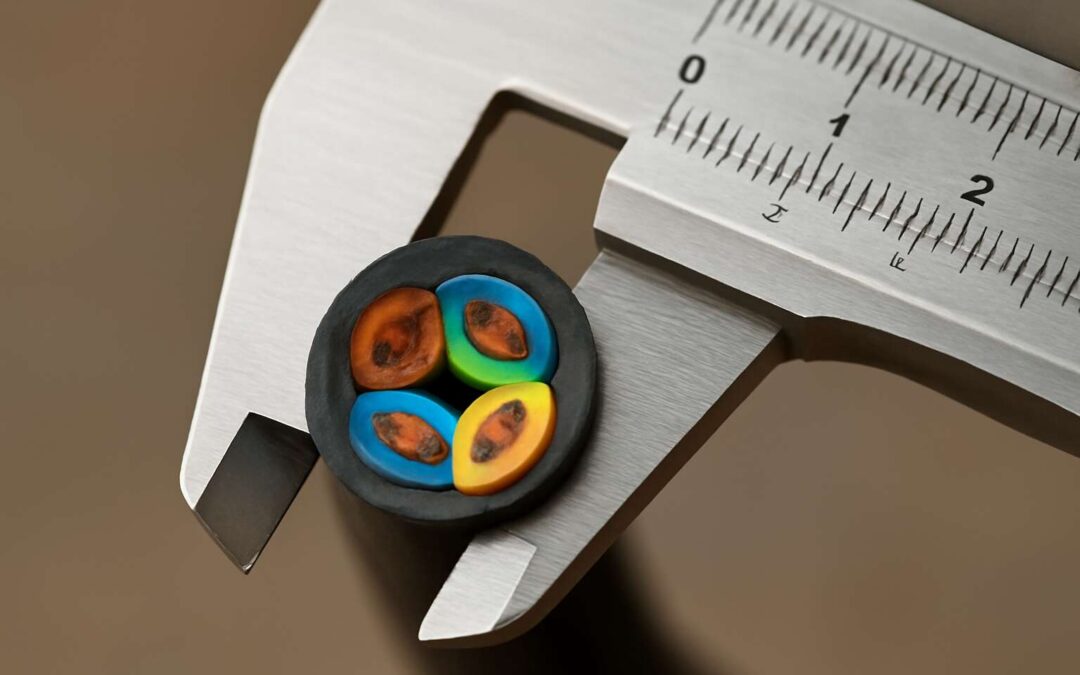
Foundations of electrical cable dimensions
What outside diameter means in cable design
There’s a quiet truth about electrical cable outside diameter: it’s more than width—it shapes safety and installability when storms roll in. In cable design, that outer size hints at insulation thickness, jacket protection, and how heat will move away from the conductors. The spec sheet’s number becomes a practical compass in the field, guiding how we route cables through conduit and along a South African home.
The foundations of this dimension are built on a few steady forces that matter to installers and customers alike. The electrical cable outside diameter answers questions about fit, bend radius, and heat. Consider these factors as part of the design:
- Conductor size and material
- Insulation thickness and composition
- Jacket thickness and protective layers
- Filler and strength members for shape and stability
In the end, that outside diameter helps a cable tell its story of reliability—from a rural homestead to a modern urban dwelling.
How insulation and shielding affect diameter
A striking 30% of field faults in South Africa trace to one overlooked detail: the outer shell’s size during installation. The electrical cable outside diameter is more than a measurement—it’s a compass for safety, heat management, and routing when storms roll in.
Insulation thickness does more than keep voltage in check; it thickens the diameter and reshapes heat flow. Materials such as PVC or XLPE pack differently, changing insulation density and the cable’s thermal and dielectric performance.
Shielding layers push diameter outward while guarding against moisture and electromagnetic interference. Foil, braids, or hybrids shielded configurations influence bend radii and conduit fit, especially in outdoor runs across SA’s climate. These details define the electrical cable outside diameter as a badge of reliability.
Foundational elements span these forces:
- Insulation thickness and composition
- Shielding type and coverage
- Filler and strength members for roundness
Common units and measurement standards
That 30% headline from the last section still hums in the workshop. Foundations of cable dimensions aren’t just numbers; they are guardians of safety and performance. When the electrical cable outside diameter is discussed, it becomes the edge where heat, moisture, and routing decisions converge, a quiet warning threaded through the gauge.
Foundational elements span measurement standards and common units that help installers speak the same language. Here are the essentials:
- Millimetres (mm) for diameter and insulation thickness
- Square millimetres (mm²) for conductor cross-section
- Standards such as IEC, SANS, and local guidelines that govern tolerances and fit
- Calibrated tools for consistent measurement in outdoor environments
These numbers are not cold; they carry heat, storms, and the burden of safety across SA’s climates. Together, these figures map the landscape where outdoor weather meets engineering, ensuring the outer diameter aligns with safety, heat management, and fit.
Comparing nominal vs actual diameter
In the workshop, a whisper travels along the copper hiss of cable—one millimetre can tilt heat toward trouble, especially under SA’s afternoon gusts.
Foundations of dimensions lean on nominal versus actual. The nominal diameter is the drawing-room figure that guides fit and procurement; the actual diameter shows up on the spool when insulation and jackets settle into place. When you measure the electrical cable outside diameter, you translate plan into space, and the difference matters for heat dissipation and moisture ingress, for routing and enclosure fit.
- Nominal diameter guides fit and procurement
- Actual diameter drives routing and clearances
- Tolerances and temperature swings tweak the final size
In SA, calibrated tools and patient measurement keep these numbers honest, turning theory into safe, reliable installations.
Measuring and verifying cable outside diameter
Tools and techniques for precise measurement
“Diameter defines fit,” a veteran linesman in a small town in South Africa likes to say, and the rhythm of his words sticks with you as the tape tightens on the sheath. Measuring the electrical cable outside diameter matters at every splice and junction, especially where insulation and shielding test the limits of tolerance in demanding environments.
To measure precisely, use calibrated instruments and measure at multiple points along the length, accounting for bends and any swelling from temperature. A digital micrometer or vernier caliper gives tight readings; a flexible ruler helps along curved sections; for quick checks, go/no-go gauges can confirm acceptance at a glance.
- Digital micrometer
- Vernier caliper
- Diameter go/no-go gauges
- Flexible measuring tape or ruler
Record each measurement, compare to the specification chart for the cable family, and verify against field conditions. Consistency translates into safer terminations and longer life in SA’s demanding environments.
Interpreting diameter from datasheets
In the field, a 0.3 mm deviation can decide the fate of a termination. The electrical cable outside diameter—often overlooked—decides fit, insulation contact, and long-term reliability. In South Africa’s sun-browned environments, insulation swells and shielding tightens, so precision isn’t a nicety—it’s a necessity that keeps terminations singing rather than sparking.
Interpreting diameter from datasheets is more courtroom than kitchen, and it rewards a careful reader. Study nominal and actual values, tolerance bands, and how temperature shifts the dimension.
- Read the tolerance band and the maximum permissible variance.
- Note the measurement units and how temperature corrections shift the diameter.
- Cross-check the datasheet with on-site measurements at representative bends.
With that knowledge, field checks become routine, not a leap of faith; the axis of safety tilts toward reliability. That quiet thrill sits behind every robust termination in SA’s demanding environments.
Tolerance and dimensional variation across manufacturing
Diameter is more than a number. When you pull back the tarp on the manufacturing line, the electrical cable outside diameter reveals the dance between insulation, shielding, and terminations. In practice, you watch for tolerance bands and real-world drift between batches.
Crossing dimensional variation is normal, but the range matters. Between nominal design and actual production, tooling wear, material density, and curing processes create spread. Datasheets show maximum permissible variance, and field teams confirm that the worst-case is manageable if the diameter stays within spec.
On-site verification relies on understanding measurement context: units, temperature, and representative points. A quick checklist might include:
- tolerance bands
- maximum variance
- temperature effects
Sample measurement procedures in field and lab
Diameter drift is the ordinary friction in manufacturing—and it matters! In South African facilities, field teams report that a meaningful share of rework traces back to the electrical cable outside diameter drifting from batch to batch, even when tolerances are technically met.
Measuring and verifying relies on context: units, temperature, representative points. In the field, teams use calibrated measuring tools and record ambient temperature to capture any drift under real conditions. In the lab, samples are measured under controlled temperature with traceable instruments and at multiple circumferential points to build a consistent profile of the diameter.
These realities show why the electrical cable outside diameter is more than a number—it’s a report card on production, materials, and process stability.
Implications of diameter on performance and installation
Voltage rating, current capacity, and sheath thickness
The term electrical cable outside diameter is more than a measurement; it is the quiet architect of every corridor it threads. In South Africa, roughly 40% of reworks trace to diameter misjudgments, a truth that shows how even a modest uptick can alter heat flow and elevate voltage margins, turning calm conduits into arcs of risk.
I watch the current crave space; diameter determines voltage rating and current capacity, while sheath thickness guards against abrasion. A larger diameter often means a higher dielectric margin and tougher insulation, yet it also adds stiffness and reduces bend radius.
- Voltage rating implications: thicker dielectric components tolerate higher voltages and excursions.
- Current-carrying capacity: larger cross-sectional area lowers resistance and heat buildup.
- Mechanical envelope: a thicker sheath and armour alter routing, trays, and connector alignments.
Designers and installers in SA must balance these forces; the diameter you see on a datasheet travels into field reality.
Cable bending radius and routing considerations
The electrical cable outside diameter governs heat flow, dielectric margin, and the quiet architecture of a system’s life. In South Africa’s dim corridors, a misread diameter can turn calm current into creeping risk, where heat pockets drift along the sheath and voltage margins widen like shadows!
A larger diameter stiffens the march of cable, elevating the required bend radius and complicating routing through trays, conduits, and tight corners. It also shifts connector alignments and reclaims space in cramped metalwork.
- Bend radius and flex life expectations
- Tray fill and routing complexity
- Connector alignment and enclosure interfaces
Designers and installers feel how the paper diameter becomes field reality—the electrical cable outside diameter on datasheets travels into the wiring labyrinth of routes, trays, and terminations.
Impact on connectors, fittings, and enclosures
The electrical cable outside diameter is more than a number on a datasheet; it’s a living constraint that shapes how systems breathe under pressure. In South Africa’s hot, dusty environments, a thicker sheath can shift heat pockets toward metalwork, while a slimmer profile may risk marginal heat buildup if insulation isn’t generous enough. Field teams imagine how every centimeter of diameter interfaces with connectors and enclosures, because a misfit here cascades into fit-and-finish challenges across the installation.
- connectors: require precise aperture and aligned mating surfaces to maintain a reliable seal and electrical integrity
- fittings: gland sizes, clamps, and adapters must accommodate the outer profile without creating strains or gaps
- enclosures: interior clearance, knockouts, and sealing interfaces must match the sheath for safe, durable terminations
When these elements align, installation flows with fewer surprises and performance stays steady as ambient conditions swing across seasons.
Safety standards and compliance related to diameter
Diameter is destiny in the heat-swept corridors of South Africa’s infrastructure. The electrical cable outside diameter becomes a living constraint, shaping heat dissipation and fit across walls, conduits, and cabinets. In the field, every millimeter of profile interacts with connectors and enclosures, turning spec sheets into a choreography of clearance and breathing room!
Safety standards and compliance treat the outer diameter as more than a number; it governs gland sizes, knockout spacings, and insulation separation.
- SANS 10142-1 and IEC 60364 specify tolerances for the electrical cable outside diameter to ensure gland fit and enclosure clearance.
- South Africa-specific guidelines require the electrical cable outside diameter to be accommodated by approved glands, clamps, and spacings to maintain safety and performance.
Selecting cables and calculating diameter requirements
How to choose conductor size and insulation for a given load
Across South Africa’s growing electrical projects, selecting the right conductor size is the quiet engine of safe performance. The electrical cable outside diameter—the outer whisper on every spec sheet—signals heat, space, and future reliability. A well-chosen diameter blends continuous load, voltage drop, and environmental cooling into a single, steady heartbeat!
To calculate diameter requirements, start with the load: determine the maximum amps, then reference a reputable ampacity guide that matches insulation and ambient temperature. Also measure voltage drop over distance and ensure the insulation thickness suits the environment. The following factors help align diameter with function:
- Current and duration
- Ambient temperature
- Conductor material and insulation class
- Route length and conduit fill
With these in hand, size the conductor and check the resulting outside diameter against space and fittings. This is where the electrical cable outside diameter matters most, guiding decisions that affect enclosure size, terminations, and future serviceability.
Deriving diameter from specification sheets and standards
Across South Africa’s growing electrical projects, the electrical cable outside diameter is the quiet engine of safe performance. The outer whisper on every spec sheet tells you how much heat a run will shed, how snug it can be in a conduit, and how ready the system is for future loads. Misread it, and you invite heat, crowding, and headaches that don’t just vanish at commissioning.
Choose cables with care by consulting specification sheets and the standards that govern our trade. Start with insulation class, conductor material, ambient temperature, and route, then align the diameter with the space and fittings. Guiding standards include:
- SANS 10142-1
- IEC 60364
- Conduit fill and routing guidelines
Between the lines, the electrical cable outside diameter becomes more than a number—it’s a space planner and a reliability predictor.
Common mistakes when estimating diameter
Across South Africa’s growing electrical projects, the electrical cable outside diameter is the quiet engine of safe performance. Choosing cables and calculating diameter requirements isn’t wizardry; it’s space planning with a liberal dose of pragmatism. The right diameter keeps heat in check, makes conduit fits feasible, and leaves room for future loads—without turning a neat install into a tight squeeze.
Common missteps include:
- Assuming nominal sizes equal actual diameters and ignoring tolerances.
- Overlooking insulation and jacket thickness that eat into space.
- Ignoring conduit fill and routing constraints when planning a run.
- Underestimating future load growth or spare capacity in the same circuit.
Respect the diameter and you respect space, heat, and future growth.
Practical tips for spec writers and procurement teams
Small measurements, big consequences—across South Africa’s growing electrical projects the electrical cable outside diameter sets the pace for heat, fits, and future loads. Getting diameter right isn’t wizardry; it’s space planning with pragmatism, a quiet driver of safe performance and efficient procurement.
Spec writers and procurement teams benefit from treating the diameter as a design parameter, not an afterthought. When diameter conversations anchor in datasheets, insulation thickness, and jacket build, the narrative stays coherent from engineering rooms to warehouse shelves—and space planning remains humane, not punitive.
This approach honours continuity, fits, and adaptability. It invites partners to share data openly, ensuring that the quiet engine—the external diameter—remains predictable in the field.