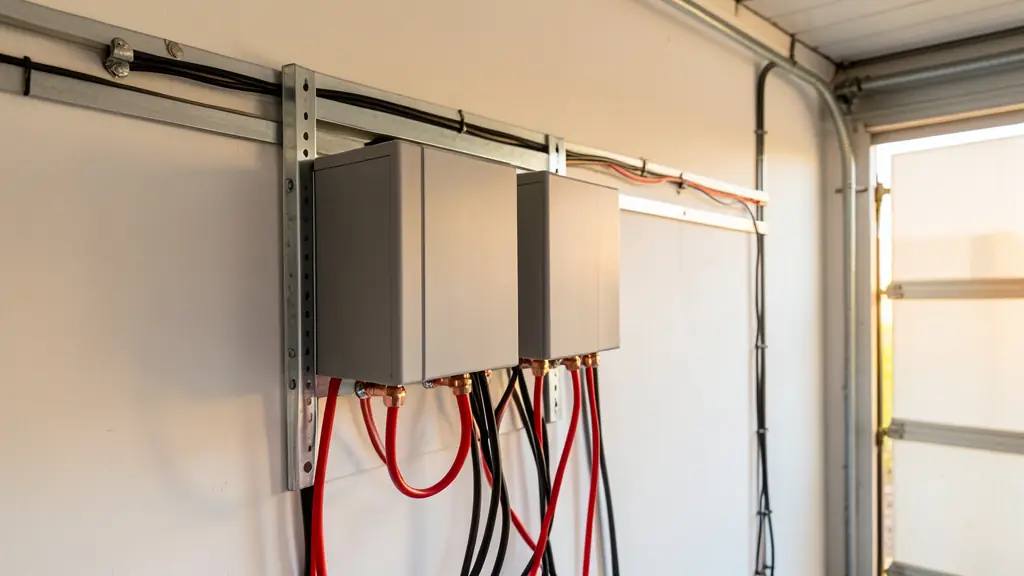
Battery cable is the heavy, flexible single-core cable that links batteries to each other and to an inverter, starter motor or charger. It carries very high direct current over short distances, so size, lugs and connections matter more than almost anywhere else in an installation. Since load-shedding, inverter and battery backup systems have made it a common purchase for homes and businesses. ElectricalCable.co.za does not sell cable. Tell us what you need and we pass your request to an independent supplier or installer in your area, who quotes you directly.
Where battery cable is used
Battery cable shows up in more places than most people expect:
- Inverter battery cable: from the battery bank to a hybrid or backup inverter
- Battery to battery cable: short interconnects joining batteries in series or parallel
- Vehicles and trucks: starter, alternator and earth straps
- Caravans, boats and 4x4s: dual-battery and auxiliary systems
- Forklifts, golf carts and UPS systems: traction and standby batteries
Sizes: 16mm to 95mm
Battery cable is sized by cross-section. Small 12 V systems may use 16 mm² or 25 mm², while 35mm battery cable is a common choice for 5 kVA-class inverters. Larger 48 V banks and high-current systems use 50, 70 or 95 mm². The correct size depends on the inverter's maximum DC current, the run length and the fuse or breaker rating. Keep runs as short as possible and make positive and negative leads the same length so parallel batteries share the load evenly.
Lugs, terminals and protection
A cable is only as good as its ends. Use copper or tinned copper lugs that match both the cable size and the stud size, crimped with a proper hydraulic or ratchet crimper, then covered with heat-shrink. A loose or poorly crimped battery cable terminal gets hot and can start a fire. Every battery bank also needs a correctly rated DC fuse or breaker close to the positive terminal, and an isolator so the system can be worked on safely.
Buying battery cable
Battery cable has very fine copper strands and a flexible PVC or rubber sheath, usually in red and black. It is sold by the metre, on drums, or as made-up leads with lugs already crimped. Price is driven by the copper price, the size, and whether you want made-up leads. Lithium battery and inverter installations connected to your home's wiring must be done by a registered electrician, who issues a COC.
Comparing battery cable prices
Cable prices change with the copper price, size, brand and quantity. When quotes arrive, check:
- Exact specification: size in mm², cores, conductor, insulation, armour and voltage rating.
- Quantity: cut length or full drum, and whether the drum deposit is refundable.
- Standards: SABS-marked cable to the relevant SANS standard, not unmarked imports.
- Delivery: lead time, delivery to site and offloading of heavy drums.
What to include in your request
- Cable size and length of red and black
- Inverter size and battery voltage (12, 24 or 48 V) if known
- Whether you want made-up leads with lugs and heat-shrink
- Lug stud sizes, plus any fuses, breakers or isolators needed
- Your suburb and whether you need an installer as well
Frequently asked questions
What size battery cable do I need for my inverter?
Can I use welding cable as battery cable?
Can I buy battery cables with the lugs already fitted?
Do you sell battery cable?
Battery Cable by province
- Battery Cable Gauteng
- Battery Cable Western Cape
- Battery Cable KwaZulu-Natal
- Battery Cable Eastern Cape
- Battery Cable Free State
- Battery Cable Limpopo
- Battery Cable Mpumalanga
- Battery Cable North West
- Battery Cable Northern Cape
Battery Cable by city
- Battery Cable in Johannesburg
- Battery Cable in Pretoria
- Battery Cable in Centurion
- Battery Cable in Sandton
- Battery Cable in Midrand
- Battery Cable in Randburg
- Battery Cable in Roodepoort
- Battery Cable in Alberton
- Battery Cable in Boksburg
- Battery Cable in Kempton Park
- Battery Cable in Benoni
- Battery Cable in Germiston
- Battery Cable in Krugersdorp
- Battery Cable in Vereeniging
- Battery Cable in Vanderbijlpark
- Battery Cable in Cape Town
- Battery Cable in Bellville
- Battery Cable in Kuils River
- Battery Cable in Somerset West
- Battery Cable in Paarl
- Battery Cable in Stellenbosch
- Battery Cable in George
- Battery Cable in Mossel Bay
- Battery Cable in Worcester
- Battery Cable in Durban
- Battery Cable in Pinetown
- Battery Cable in Pietermaritzburg
- Battery Cable in Richards Bay
- Battery Cable in Ballito
- Battery Cable in Margate
- Battery Cable in Newcastle
- Battery Cable in Port Elizabeth (Gqeberha)
- Battery Cable in East London
- Battery Cable in Bloemfontein
- Battery Cable in Welkom
- Battery Cable in Polokwane
- Battery Cable in Tzaneen
- Battery Cable in Nelspruit (Mbombela)
- Battery Cable in Witbank (eMalahleni)
- Battery Cable in Middelburg
- Battery Cable in Secunda
- Battery Cable in Rustenburg
- Battery Cable in Klerksdorp
- Battery Cable in Potchefstroom
- Battery Cable in Kimberley
- Battery Cable in Upington
Related cable and services
- EC-11Solar CableSingle-core 4 mm², 6 mm², 10 mm² and 16 mm² DC solar cable
- AC-04Cable Lugs and ConnectorsCopper, tinned copper, aluminium and bimetallic cable lugs
- EC-13Welding CableSingle-core 16, 25, 35, 50, 70 and 95 mm²
- EC-14Copper and Aluminium CableCopper conductors from 1.5 mm² upward for wiring and feeders