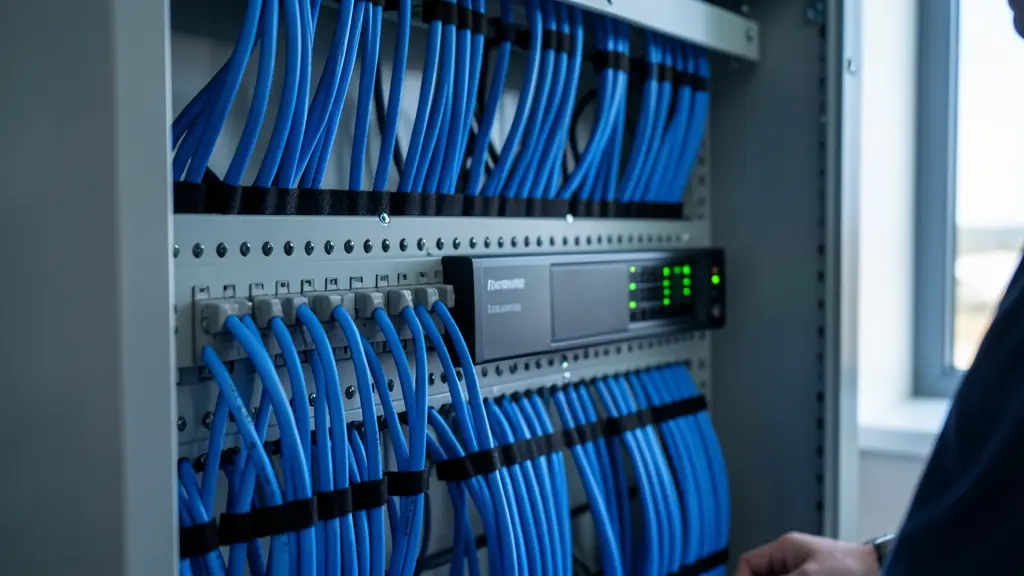
Cat6 cable is the standard copper network cable for wiring homes, offices and shops, connecting computers, access points, CCTV cameras and smart TVs to a router or switch. A wired network is faster and more reliable than Wi-Fi, and it is the backbone behind most good wireless systems too. ElectricalCable.co.za does not sell or install cable. Tell us what you need, whether supply only or a full network installation, and we pass your request to an independent supplier or network installer in your area, who quotes you directly.
Cat5e, Cat6 and Cat6a
All three are twisted-pair LAN cable with four pairs of copper conductors, and all support runs up to 100 m:
- Cat5e: gigabit speeds, fine for basic home and small office use
- Cat6: gigabit at full length and 10 Gb/s over shorter runs, the usual choice for new installs
- Cat6a: 10 Gb/s over the full 100 m, used in offices and server rooms
UTP (unshielded) suits most buildings, while FTP or shielded cable helps near heavy electrical noise.
Boxes, indoor and outdoor cable
Network cable is mostly sold in boxes or drums of 305 m, while 100m Cat6 cable boxes and ready-made patch leads suit small jobs. Indoor cable has a PVC or low-smoke zero-halogen (LSZH) sheath; LSZH is often specified in offices and public buildings. Outdoor and underground runs need UV-resistant, gel-filled or armoured outdoor cable, often in conduit. Keep data cable away from power cables or cross them at right angles to avoid interference.
Networking cable installation
Good networking cable installation covers more than pulling cable. A proper installer plans cable routes, fits trunking or cable tray, terminates onto keystone sockets and patch panels, labels every point, and tests each link. Certified testing proves the cabling meets its category. For larger sites, fibre-optic cable links buildings and floors, with Cat6 to the desks. Ask for a floor plan with points marked so the quote reflects the real job.
Price and what to ask
Network cable price depends on the category, shielding, sheath type, box quantity and the copper content. Cheap cable made with copper-clad aluminium rather than solid copper is common and performs poorly, so ask for solid copper conductors. For data cable installation, the number of points, ceiling and wall access, distance to the cabinet and testing requirements drive the cost. Power to comms cabinets and racks is fixed wiring and must be done by a registered electrician.
Comparing data and network cable prices
Cable prices change with the copper price, size, brand and quantity. When quotes arrive, check:
- Exact specification: size in mm², cores, conductor, insulation, armour and voltage rating.
- Quantity: cut length or full drum, and whether the drum deposit is refundable.
- Standards: SABS-marked cable to the relevant SANS standard, not unmarked imports.
- Delivery: lead time, delivery to site and offloading of heavy drums.
What to include in your request
- Cable category (Cat5e, Cat6 or Cat6a) and indoor or outdoor use
- Number of network points and a rough floor plan
- Supply only or full installation with termination and testing
- Cabinets, patch panels, switches or Wi-Fi access points needed
- Your suburb, building type and preferred timing
Frequently asked questions
Should I use Cat6 or Cat5e?
How far can a Cat6 cable run?
Can I run network cable in the same conduit as electrical cable?
Do you install network cabling?
Data and Network Cable by province
- Data and Network Cable Gauteng
- Data and Network Cable Western Cape
- Data and Network Cable KwaZulu-Natal
- Data and Network Cable Eastern Cape
- Data and Network Cable Free State
- Data and Network Cable Limpopo
- Data and Network Cable Mpumalanga
- Data and Network Cable North West
- Data and Network Cable Northern Cape
Data and Network Cable by city
- Data and Network Cable in Johannesburg
- Data and Network Cable in Pretoria
- Data and Network Cable in Centurion
- Data and Network Cable in Sandton
- Data and Network Cable in Midrand
- Data and Network Cable in Randburg
- Data and Network Cable in Roodepoort
- Data and Network Cable in Alberton
- Data and Network Cable in Boksburg
- Data and Network Cable in Kempton Park
- Data and Network Cable in Benoni
- Data and Network Cable in Germiston
- Data and Network Cable in Krugersdorp
- Data and Network Cable in Vereeniging
- Data and Network Cable in Vanderbijlpark
- Data and Network Cable in Cape Town
- Data and Network Cable in Bellville
- Data and Network Cable in Kuils River
- Data and Network Cable in Somerset West
- Data and Network Cable in Paarl
- Data and Network Cable in Stellenbosch
- Data and Network Cable in George
- Data and Network Cable in Mossel Bay
- Data and Network Cable in Worcester
- Data and Network Cable in Durban
- Data and Network Cable in Pinetown
- Data and Network Cable in Pietermaritzburg
- Data and Network Cable in Richards Bay
- Data and Network Cable in Ballito
- Data and Network Cable in Margate
- Data and Network Cable in Newcastle
- Data and Network Cable in Port Elizabeth (Gqeberha)
- Data and Network Cable in East London
- Data and Network Cable in Bloemfontein
- Data and Network Cable in Welkom
- Data and Network Cable in Polokwane
- Data and Network Cable in Tzaneen
- Data and Network Cable in Nelspruit (Mbombela)
- Data and Network Cable in Witbank (eMalahleni)
- Data and Network Cable in Middelburg
- Data and Network Cable in Secunda
- Data and Network Cable in Rustenburg
- Data and Network Cable in Klerksdorp
- Data and Network Cable in Potchefstroom
- Data and Network Cable in Kimberley
- Data and Network Cable in Upington
Related cable and services
- AC-01Cable TrayLadder, perforated, wire mesh (basket) and solid-bottom tray
- AC-02Electrical ConduitRigid PVC conduit in 20, 25, 32, 40 and 50 mm
- SV-01Electrical Cable InstallationLighting, plug, stove, geyser and dedicated appliance circuits
- EC-01Electrical CableSurfix, house wire, flex, armoured, XLPE, solar, battery, welding and data cable