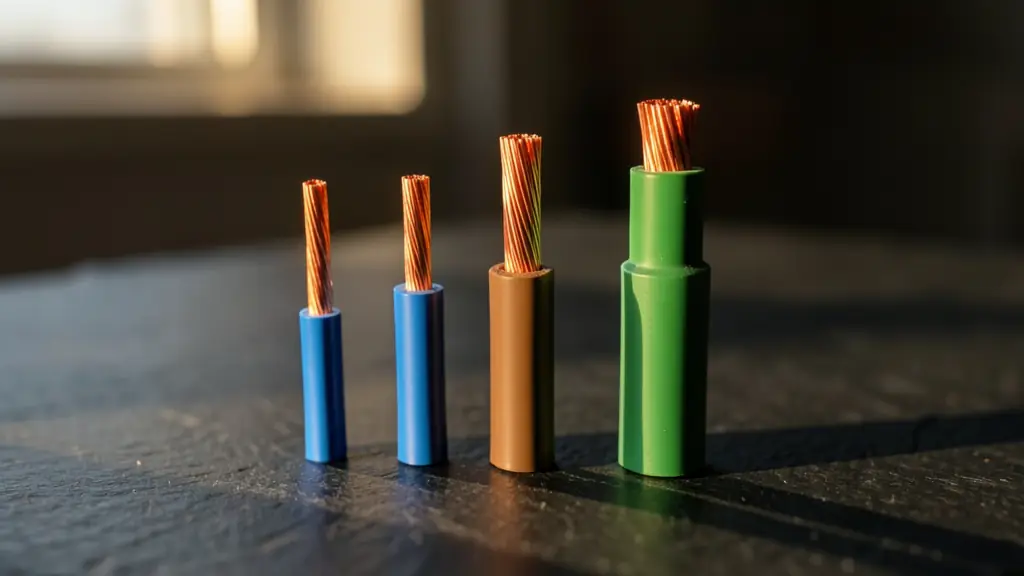
People search for an electrical cable size calculator because choosing the wrong size can mean tripping breakers, dim lights or a cable that overheats. This guide shows which sizes are typically used for which circuits in South Africa, and explains why the final size must be calculated by a registered electrician. ElectricalCable.co.za doesn't sell cable. Tell us what you need to power and how far, and we pass your request to an independent supplier or electrical contractor near you, who quotes you directly. The request is free.
Typical cable sizes and uses
- 1.5 mm²: lighting circuits
- 2.5 mm²: plug circuits
- 4 mm² and 6 mm²: stoves, geysers, air conditioners and short sub-feeds; 4mm electrical cable and 6mm electrical cable are common for these
- 10 mm² and 16 mm²: main supplies to a house, sub-DBs in outbuildings and larger inverters; 10mm electrical cable often feeds a cottage or workshop
- 25 mm² and up: factories, large buildings, shopping centres and long supply runs
These are starting points, not a substitute for a calculation. Solar systems add their own sizing for DC and battery cable, which carry high currents at low voltage.
What changes the size
The electrical cable current carrying capacity depends on more than the cable itself:
- Length and volt drop: long runs to a borehole or outbuilding often need a bigger cable than the load suggests
- Installation method: cable in free air, conduit, roof insulation or underground is rated differently
- Grouping: several cables bunched together run hotter
- Ambient temperature: hot roof spaces reduce the rating
- Protection: the breaker must suit the cable
- Conductor: aluminium needs a larger size than copper for the same load
Why online tables aren't enough
An electrical cable size and current rating table from a website or manufacturer is based on specific conditions that may not match your installation. Online calculators often ignore volt drop, grouping or derating, or use overseas standards. In South Africa, cable sizing for fixed wiring is done to SANS 10142-1 by a registered electrician, who is responsible for the circuit when they sign the COC. Undersized cable can pass a quick look but overheat under load, damage equipment or trip breakers. Oversizing every circuit wastes money, so a proper calculation pays for itself.
Getting the right size quoted
The quickest way to get the right cable is to describe the job: what the cable will feed, the breaker or load if known, the length of the run and how it will be installed. An electrician or supplier can then size the cable, list the accessories and quote. Photos of the DB board and the route help too, especially for underground runs and outbuildings. Send those details with your request and get a free quote.
Comparing quotes for cable size guide
The lowest price is not always the best value. When your quote arrives, check:
- Scope: exactly which cable, size and length is allowed for, and who supplies it.
- Civil work: trenching, sleeves, chasing and making good, and reinstating paving or lawns.
- Terminations and testing: glands, lugs, joints, insulation and earth-loop tests.
- Compliance: that a registered electrician issues a COC under SANS 10142-1, and the guarantee on workmanship.
What to include in your request
- What the cable will feed (geyser, stove, borehole, sub-DB, inverter)
- Breaker size or appliance rating, if known
- Length of the cable run in metres
- How it will be installed (roof, conduit, underground)
- Single-phase or three-phase supply
Frequently asked questions
What size cable do I need for a geyser or stove?
What size cable is used for the main supply to a house?
Can I use an online electrical cable size calculator?
Does a longer cable need to be bigger?
Cable Size Guide by province
- Cable Size Guide Gauteng
- Cable Size Guide Western Cape
- Cable Size Guide KwaZulu-Natal
- Cable Size Guide Eastern Cape
- Cable Size Guide Free State
- Cable Size Guide Limpopo
- Cable Size Guide Mpumalanga
- Cable Size Guide North West
- Cable Size Guide Northern Cape
Cable Size Guide by city
- Cable Size Guide in Johannesburg
- Cable Size Guide in Pretoria
- Cable Size Guide in Centurion
- Cable Size Guide in Sandton
- Cable Size Guide in Midrand
- Cable Size Guide in Randburg
- Cable Size Guide in Roodepoort
- Cable Size Guide in Alberton
- Cable Size Guide in Boksburg
- Cable Size Guide in Kempton Park
- Cable Size Guide in Benoni
- Cable Size Guide in Germiston
- Cable Size Guide in Krugersdorp
- Cable Size Guide in Vereeniging
- Cable Size Guide in Vanderbijlpark
- Cable Size Guide in Cape Town
- Cable Size Guide in Bellville
- Cable Size Guide in Kuils River
- Cable Size Guide in Somerset West
- Cable Size Guide in Paarl
- Cable Size Guide in Stellenbosch
- Cable Size Guide in George
- Cable Size Guide in Mossel Bay
- Cable Size Guide in Worcester
- Cable Size Guide in Durban
- Cable Size Guide in Pinetown
- Cable Size Guide in Pietermaritzburg
- Cable Size Guide in Richards Bay
- Cable Size Guide in Ballito
- Cable Size Guide in Margate
- Cable Size Guide in Newcastle
- Cable Size Guide in Port Elizabeth (Gqeberha)
- Cable Size Guide in East London
- Cable Size Guide in Bloemfontein
- Cable Size Guide in Welkom
- Cable Size Guide in Polokwane
- Cable Size Guide in Tzaneen
- Cable Size Guide in Nelspruit (Mbombela)
- Cable Size Guide in Witbank (eMalahleni)
- Cable Size Guide in Middelburg
- Cable Size Guide in Secunda
- Cable Size Guide in Rustenburg
- Cable Size Guide in Klerksdorp
- Cable Size Guide in Potchefstroom
- Cable Size Guide in Kimberley
- Cable Size Guide in Upington