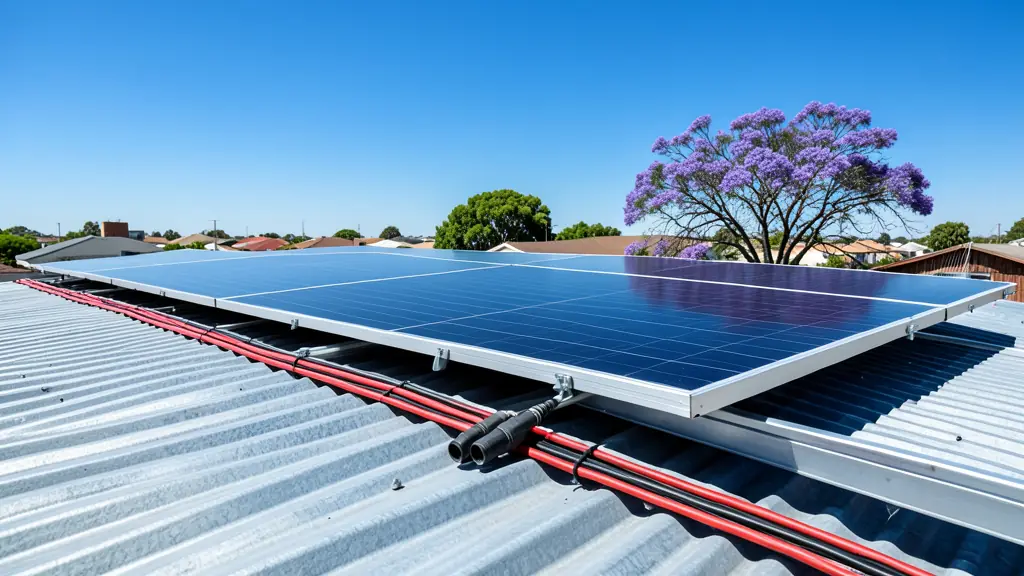
Solar cable carries direct current from PV panels to the inverter, and it has a much harder life than cable inside a wall: years of sun, heat, rain and wind on a roof. That is why PV systems use dedicated double-insulated, UV-resistant DC cable rather than ordinary house wire. With load-shedding driving solar installs across South Africa, demand is high. ElectricalCable.co.za does not sell cable. Tell us what you need and where you are, and we pass your request to an independent cable supplier or solar installer in your area, who quotes you directly.
What makes solar cable different
DC solar cable is a single-core cable with tinned copper strands, a cross-linked insulation layer and a tough outer sheath. It is rated for high DC voltages (commonly 1 500 V DC under the international PV cable standards), resists UV and ozone, and handles high roof temperatures. Tinned copper resists corrosion, which matters at the coast. Red and black sheaths make positive and negative easy to tell apart. Ordinary PVC cable is not designed for this and degrades quickly in direct sun.
4mm vs 6mm solar cable
4mm solar cable is the common choice for string wiring on small to medium residential systems with short runs. 6mm solar cable is used for longer runs from the roof to the inverter, higher-current strings and larger systems, because it loses less power to voltage drop. Larger sizes such as 10 mm² and 16 mm² are used on commercial arrays and combiner box feeds. The installer should size the cable from the string current, the run length and the inverter's input limits.
Connectors and accessories
Panels are joined with solar cable connectors, usually MC4-type plug-and-socket connectors crimped onto the cable with the correct tool. Mixing connector makes or using poor crimps is a leading cause of hot spots and fires on PV systems. A complete quote often also covers DC isolators, combiner boxes, surge protection, UV-resistant cable ties, conduit for roof penetrations, and the AC cable and earthing from the inverter to the DB board.
Solar cable price and installation
Solar cable price depends on the copper price, the cable size, whether you buy 100 m drums or cut lengths, and the quantity. Red and black are usually bought in equal lengths. Solar installations connected to your home's wiring must comply with SANS 10142-1, and grid-tied systems also need municipal or Eskom approval. A registered electrician must sign off the work and issue a COC, so most homeowners buy cable through their installer.
Comparing solar cable prices
Cable prices change with the copper price, size, brand and quantity. When quotes arrive, check:
- Exact specification: size in mm², cores, conductor, insulation, armour and voltage rating.
- Quantity: cut length or full drum, and whether the drum deposit is refundable.
- Standards: SABS-marked cable to the relevant SANS standard, not unmarked imports.
- Delivery: lead time, delivery to site and offloading of heavy drums.
What to include in your request
- Cable size (4 mm² or 6 mm²) and length of red and black
- Number of panels, system size and inverter model if known
- Whether you also need connectors, isolators and combiner boxes
- Supply only or supply through a registered solar installer
- Your suburb, roof type and when you need the material
Frequently asked questions
Can I use normal house wire for solar panels?
Should I use 4mm or 6mm solar cable?
How much solar cable do I need?
Do I need a COC for a solar installation?
Solar Cable by province
- Solar Cable Gauteng
- Solar Cable Western Cape
- Solar Cable KwaZulu-Natal
- Solar Cable Eastern Cape
- Solar Cable Free State
- Solar Cable Limpopo
- Solar Cable Mpumalanga
- Solar Cable North West
- Solar Cable Northern Cape
Solar Cable by city
- Solar Cable in Johannesburg
- Solar Cable in Pretoria
- Solar Cable in Centurion
- Solar Cable in Sandton
- Solar Cable in Midrand
- Solar Cable in Randburg
- Solar Cable in Roodepoort
- Solar Cable in Alberton
- Solar Cable in Boksburg
- Solar Cable in Kempton Park
- Solar Cable in Benoni
- Solar Cable in Germiston
- Solar Cable in Krugersdorp
- Solar Cable in Vereeniging
- Solar Cable in Vanderbijlpark
- Solar Cable in Cape Town
- Solar Cable in Bellville
- Solar Cable in Kuils River
- Solar Cable in Somerset West
- Solar Cable in Paarl
- Solar Cable in Stellenbosch
- Solar Cable in George
- Solar Cable in Mossel Bay
- Solar Cable in Worcester
- Solar Cable in Durban
- Solar Cable in Pinetown
- Solar Cable in Pietermaritzburg
- Solar Cable in Richards Bay
- Solar Cable in Ballito
- Solar Cable in Margate
- Solar Cable in Newcastle
- Solar Cable in Port Elizabeth (Gqeberha)
- Solar Cable in East London
- Solar Cable in Bloemfontein
- Solar Cable in Welkom
- Solar Cable in Polokwane
- Solar Cable in Tzaneen
- Solar Cable in Nelspruit (Mbombela)
- Solar Cable in Witbank (eMalahleni)
- Solar Cable in Middelburg
- Solar Cable in Secunda
- Solar Cable in Rustenburg
- Solar Cable in Klerksdorp
- Solar Cable in Potchefstroom
- Solar Cable in Kimberley
- Solar Cable in Upington
Related cable and services
- EC-12Battery CableSingle-core 16, 25, 35, 50, 70 and 95 mm²
- AC-04Cable Lugs and ConnectorsCopper, tinned copper, aluminium and bimetallic cable lugs
- AC-02Electrical ConduitRigid PVC conduit in 20, 25, 32, 40 and 50 mm
- SV-01Electrical Cable InstallationLighting, plug, stove, geyser and dedicated appliance circuits