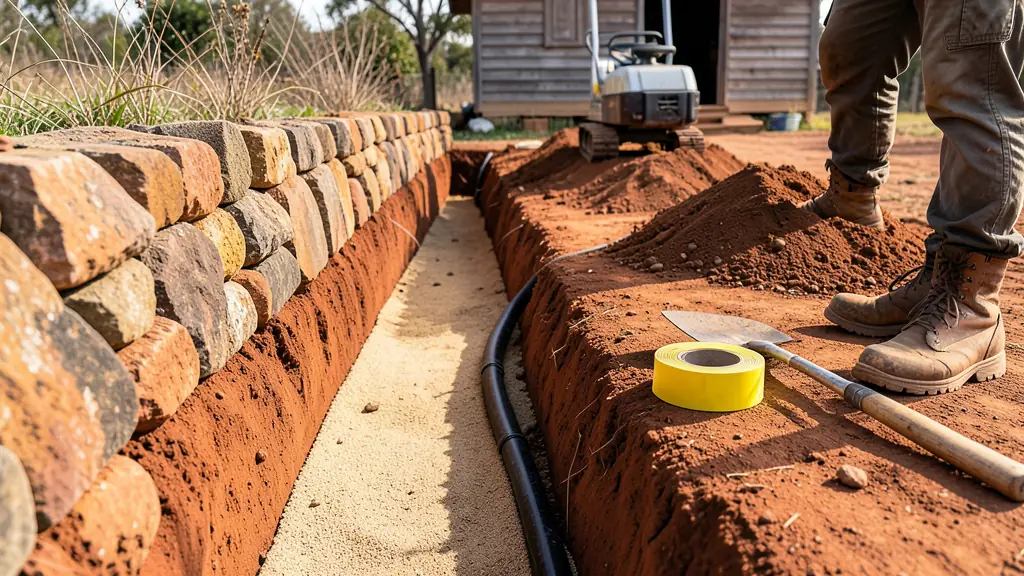
When power has to reach a cottage, borehole, gate motor or another building, the cable usually goes in the ground. Underground cable work needs the right cable, the right depth and a trench that is backfilled properly so the cable is protected for decades. ElectricalCable.co.za passes your request to an independent electrical contractor who does underground cable installation in your area. They quote you directly for the cable, the trenching and the certificate. The service is free and there is no obligation to accept.
Which cable goes underground
Ordinary surfix and house wire are not made for direct burial. Underground runs normally use steel wire armoured (SWA) cable, which has a tough outer sheath and a layer of steel wires that protect the cores and can also serve as an earth path. Some installations use cable in a heavy-duty sleeve or duct, which makes it easier to replace later. The contractor sizes the cable for the load and the length of the run, because volt drop over long distances often calls for a bigger size than the load alone suggests.
Excavation and trenching
Excavation and trenching is usually the biggest part of the job. Short runs in soft soil are dug by hand; longer runs often justify trenching machine hire or a small excavator. The cable is laid at the depth required by SANS 10142-1 (commonly about 600 mm for low-voltage cable in open ground), bedded in sand, covered with warning tape above it and then backfilled and compacted. Sleeves are used under driveways, paving and roads, and where the cable enters or leaves the ground.
What drives the cost
People often ask about the cost of trenching and backfilling in South Africa, but it varies a lot from site to site. The main factors are trench length, soil type (sand, clay, rock or old rubble), how much paving or lawn has to be lifted and reinstated, cable size and the current copper price, terminations and glands at each end, and whether machines can reach the site. A contractor will usually want to walk the route before giving a firm price.
Avoiding existing services
Before digging, the contractor should check for existing water pipes, irrigation, municipal cables, fibre and gas lines. On larger or public sites a cable locator is used to scan the route. Record where the new cable runs, with measurements from fixed points, so nobody digs into it later. A proper underground cable installation finishes with insulation and continuity tests and a COC for the new circuit.
Comparing quotes for underground cable installation
The lowest price is not always the best value. When your quote arrives, check:
- Scope: exactly which cable, size and length is allowed for, and who supplies it.
- Civil work: trenching, sleeves, chasing and making good, and reinstating paving or lawns.
- Terminations and testing: glands, lugs, joints, insulation and earth-loop tests.
- Compliance: that a registered electrician issues a COC under SANS 10142-1, and the guarantee on workmanship.
What to include in your request
- Where the cable starts and ends, and the approximate distance
- What the cable will supply (cottage, pump, gate, workshop)
- Ground surface along the route: lawn, paving, driveway or rock
- Whether you want the contractor to do the trenching or dig it yourself
- Photos of the route, the DB board and your suburb
Frequently asked questions
How deep must underground cable be buried?
Can I dig the trench myself to save money?
Do I need armoured cable underground?
Can underground cable be run alongside water pipes?
Underground Cable Installation by province
- Underground Cable Installation Gauteng
- Underground Cable Installation Western Cape
- Underground Cable Installation KwaZulu-Natal
- Underground Cable Installation Eastern Cape
- Underground Cable Installation Free State
- Underground Cable Installation Limpopo
- Underground Cable Installation Mpumalanga
- Underground Cable Installation North West
- Underground Cable Installation Northern Cape
Underground Cable Installation by city
- Underground Cable Installation in Johannesburg
- Underground Cable Installation in Pretoria
- Underground Cable Installation in Centurion
- Underground Cable Installation in Sandton
- Underground Cable Installation in Midrand
- Underground Cable Installation in Randburg
- Underground Cable Installation in Roodepoort
- Underground Cable Installation in Alberton
- Underground Cable Installation in Boksburg
- Underground Cable Installation in Kempton Park
- Underground Cable Installation in Benoni
- Underground Cable Installation in Germiston
- Underground Cable Installation in Krugersdorp
- Underground Cable Installation in Vereeniging
- Underground Cable Installation in Vanderbijlpark
- Underground Cable Installation in Cape Town
- Underground Cable Installation in Bellville
- Underground Cable Installation in Kuils River
- Underground Cable Installation in Somerset West
- Underground Cable Installation in Paarl
- Underground Cable Installation in Stellenbosch
- Underground Cable Installation in George
- Underground Cable Installation in Mossel Bay
- Underground Cable Installation in Worcester
- Underground Cable Installation in Durban
- Underground Cable Installation in Pinetown
- Underground Cable Installation in Pietermaritzburg
- Underground Cable Installation in Richards Bay
- Underground Cable Installation in Ballito
- Underground Cable Installation in Margate
- Underground Cable Installation in Newcastle
- Underground Cable Installation in Port Elizabeth (Gqeberha)
- Underground Cable Installation in East London
- Underground Cable Installation in Bloemfontein
- Underground Cable Installation in Welkom
- Underground Cable Installation in Polokwane
- Underground Cable Installation in Tzaneen
- Underground Cable Installation in Nelspruit (Mbombela)
- Underground Cable Installation in Witbank (eMalahleni)
- Underground Cable Installation in Middelburg
- Underground Cable Installation in Secunda
- Underground Cable Installation in Rustenburg
- Underground Cable Installation in Klerksdorp
- Underground Cable Installation in Potchefstroom
- Underground Cable Installation in Kimberley
- Underground Cable Installation in Upington
Related cable and services
- EC-05Armoured Cable (SWA)PVC/SWA/PVC or XLPE/SWA/PVC, 600/1000 V
- SV-01Electrical Cable InstallationLighting, plug, stove, geyser and dedicated appliance circuits
- SV-03Cable Fault Finding and RepairInsulation resistance and continuity testing
- AC-03Cable GlandsBrass, nickel-plated brass, nylon and stainless steel glands