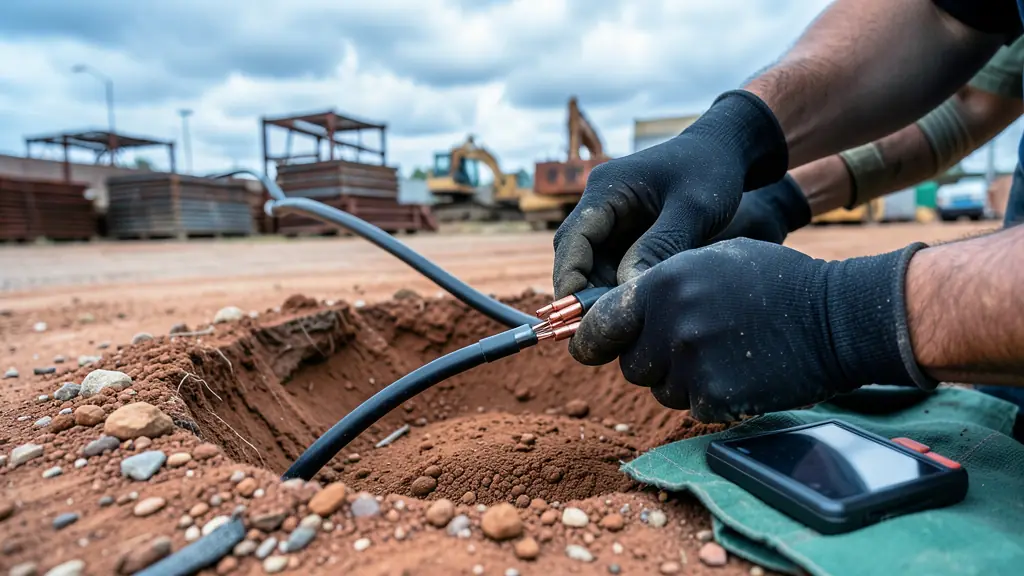
A damaged cable can trip the earth leakage, cut power to an outbuilding or leave half a factory dark. Finding the fault quickly and repairing it with a proper cable joint is specialist work. ElectricalCable.co.za passes your request to an independent electrical contractor in your area who does fault finding and repairs. They test the cable, locate the damage, fit a joint or replace the section, and quote you directly. We don't do repairs ourselves, the service is free and there is no obligation to accept a quote.
Common causes of cable faults
- Cables cut or crushed by digging, fencing posts or tree roots
- Water getting into old joints, glands or damaged sheaths
- Rodents chewing cable in ceilings and roof spaces
- Overloaded or undersized cables that have overheated
- Loose terminations at the DB board, isolator or appliance
- Cable theft, which often leaves damaged ends to be rejoined
How faults are located
The contractor starts with an insulation resistance test and continuity checks to confirm which core is faulty and what kind of fault it is. On buried cables, an underground cable fault locator narrows the position: a time-domain reflectometer estimates the distance along the cable, and a surge generator with an acoustic or magnetic receiver pinpoints the exact spot so only a small hole has to be dug. Inside buildings, the fault is often found by testing circuit by circuit and inspecting joints and terminations.
Cable joints and splicing
Once the damaged section is exposed, it is cut out and rejoined using a splicing kit for electrical cable. Low-voltage joints are usually heat-shrink or resin-filled kits with crimped ferrules as the electric cable joint connector on each core, plus continuity for the armour or earth. Medium-voltage cables need specialist joint kits and a qualified jointer. A good joint is watertight, mechanically sound and should last as long as the cable. If a run has several faults or is badly undersized, replacing it may be better value.
What affects the repair cost
People search for a cable joint kit price list, but the kit is a small part of the bill. Cost depends on how long it takes to locate the fault, the cable size and number of cores, how deep and accessible the cable is, the surface to be dug up and reinstated, and whether one joint or a new length of cable is needed. Describe the symptoms and send photos so the contractor can plan the visit.
Comparing quotes for cable fault finding and repair
The lowest price is not always the best value. When your quote arrives, check:
- Scope: exactly which cable, size and length is allowed for, and who supplies it.
- Civil work: trenching, sleeves, chasing and making good, and reinstating paving or lawns.
- Terminations and testing: glands, lugs, joints, insulation and earth-loop tests.
- Compliance: that a registered electrician issues a COC under SANS 10142-1, and the guarantee on workmanship.
What to include in your request
- Symptoms: what trips, what has no power and when it started
- Cable type and size if known, and whether it is buried or concealed
- Approximate length of the cable run and any recent digging
- Photos of the DB board, cable ends and route
- Your suburb and how urgent the repair is
Frequently asked questions
Is a cable joint as good as a new cable?
How do I know if my underground cable is damaged?
Can I join a cable with insulation tape?
How long does fault finding take?
Cable Fault Finding and Repair by province
- Cable Fault Finding and Repair Gauteng
- Cable Fault Finding and Repair Western Cape
- Cable Fault Finding and Repair KwaZulu-Natal
- Cable Fault Finding and Repair Eastern Cape
- Cable Fault Finding and Repair Free State
- Cable Fault Finding and Repair Limpopo
- Cable Fault Finding and Repair Mpumalanga
- Cable Fault Finding and Repair North West
- Cable Fault Finding and Repair Northern Cape
Cable Fault Finding and Repair by city
- Cable Fault Finding and Repair in Johannesburg
- Cable Fault Finding and Repair in Pretoria
- Cable Fault Finding and Repair in Centurion
- Cable Fault Finding and Repair in Sandton
- Cable Fault Finding and Repair in Midrand
- Cable Fault Finding and Repair in Randburg
- Cable Fault Finding and Repair in Roodepoort
- Cable Fault Finding and Repair in Alberton
- Cable Fault Finding and Repair in Boksburg
- Cable Fault Finding and Repair in Kempton Park
- Cable Fault Finding and Repair in Benoni
- Cable Fault Finding and Repair in Germiston
- Cable Fault Finding and Repair in Krugersdorp
- Cable Fault Finding and Repair in Vereeniging
- Cable Fault Finding and Repair in Vanderbijlpark
- Cable Fault Finding and Repair in Cape Town
- Cable Fault Finding and Repair in Bellville
- Cable Fault Finding and Repair in Kuils River
- Cable Fault Finding and Repair in Somerset West
- Cable Fault Finding and Repair in Paarl
- Cable Fault Finding and Repair in Stellenbosch
- Cable Fault Finding and Repair in George
- Cable Fault Finding and Repair in Mossel Bay
- Cable Fault Finding and Repair in Worcester
- Cable Fault Finding and Repair in Durban
- Cable Fault Finding and Repair in Pinetown
- Cable Fault Finding and Repair in Pietermaritzburg
- Cable Fault Finding and Repair in Richards Bay
- Cable Fault Finding and Repair in Ballito
- Cable Fault Finding and Repair in Margate
- Cable Fault Finding and Repair in Newcastle
- Cable Fault Finding and Repair in Port Elizabeth (Gqeberha)
- Cable Fault Finding and Repair in East London
- Cable Fault Finding and Repair in Bloemfontein
- Cable Fault Finding and Repair in Welkom
- Cable Fault Finding and Repair in Polokwane
- Cable Fault Finding and Repair in Tzaneen
- Cable Fault Finding and Repair in Nelspruit (Mbombela)
- Cable Fault Finding and Repair in Witbank (eMalahleni)
- Cable Fault Finding and Repair in Middelburg
- Cable Fault Finding and Repair in Secunda
- Cable Fault Finding and Repair in Rustenburg
- Cable Fault Finding and Repair in Klerksdorp
- Cable Fault Finding and Repair in Potchefstroom
- Cable Fault Finding and Repair in Kimberley
- Cable Fault Finding and Repair in Upington
Related cable and services
- SV-02Underground Cable InstallationSteel wire armoured cable from 2.5 mm² to large multi-core sizes
- EC-05Armoured Cable (SWA)PVC/SWA/PVC or XLPE/SWA/PVC, 600/1000 V
- AC-04Cable Lugs and ConnectorsCopper, tinned copper, aluminium and bimetallic cable lugs
- SV-01Electrical Cable InstallationLighting, plug, stove, geyser and dedicated appliance circuits