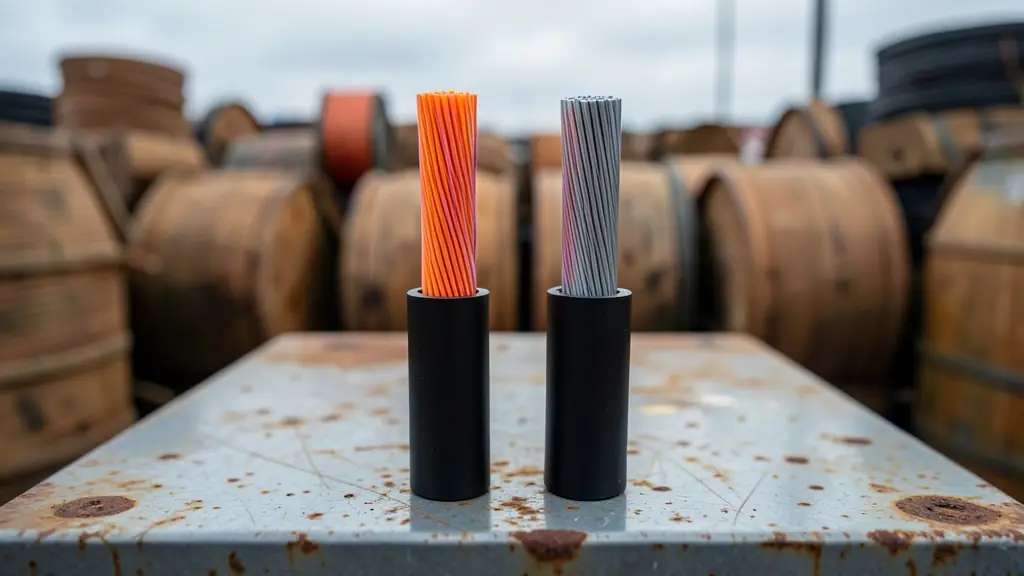
Most cable in a home is copper cable, but on large mains supplies, sub-mains and utility networks aluminium cable is widely used because it is lighter and costs less for the same current. Choosing between them affects price, cable size, terminations and even theft risk. ElectricalCable.co.za does not sell cable. Tell us what you need, the size, length and where you are, and we pass your request to an independent cable supplier or electrical contractor in your area, who quotes you directly. There is no cost and no obligation.
Copper cable
Copper is the best common conductor: it carries more current for its size, is easy to terminate, bends well and resists corrosion. That is why house wire, surfix, flex and most small armoured cables use copper, and why it is the default for final circuits. The downside is cost. Price for copper cable follows the world copper price, which can move sharply, and copper's scrap value makes cable theft a serious problem in South Africa.
Aluminium cable
Aluminium conducts less well than copper, so an aluminium cable has to be a size or two larger to carry the same current. It is still much lighter and usually cheaper for large sizes, which is why municipalities, Eskom and large sites use it for mains, sub-mains and overhead lines. Aluminium armoured cable and aluminium XLPE cable are common from about 25 mm² upward. Its lower scrap value also makes it less attractive to thieves.
Aluminium vs copper cable
The aluminium vs copper cable choice comes down to size and connection points:
- Small circuits: copper is standard and aluminium is generally not used
- Large feeders: aluminium can save significantly on long, heavy runs
- Terminations: aluminium needs aluminium or bimetallic lugs, oxide-inhibiting compound and correct torque
- Space: larger aluminium cable needs bigger glands, trays and trenches
An electrical engineer or contractor should size the cable to SANS 10142-1 for the load, length and installation method.
Copper cable for sale and pricing
Suppliers sell copper cable for sale and aluminium cable by the metre, in cut lengths or on full drums. Price depends on the metal price on the day, conductor size, number of cores, armoured or unarmoured construction, insulation type and delivery. Quotes are often valid for a short time because of metal price swings. If you are pricing a large feeder, ask for both copper and aluminium options so you can compare.
Comparing copper and aluminium cable prices
Cable prices change with the copper price, size, brand and quantity. When quotes arrive, check:
- Exact specification: size in mm², cores, conductor, insulation, armour and voltage rating.
- Quantity: cut length or full drum, and whether the drum deposit is refundable.
- Standards: SABS-marked cable to the relevant SANS standard, not unmarked imports.
- Delivery: lead time, delivery to site and offloading of heavy drums.
What to include in your request
- Copper, aluminium, or a price for both options
- Conductor size, number of cores and armoured or not
- Length required, and cut lengths or full drum
- Lugs, glands and terminations needed for each end
- Your suburb, site access and when you need delivery
Frequently asked questions
Is aluminium cable safe?
Can I use aluminium cable in my house?
Why does copper cable price change so often?
Do you sell copper or aluminium cable?
Copper and Aluminium Cable by province
- Copper and Aluminium Cable Gauteng
- Copper and Aluminium Cable Western Cape
- Copper and Aluminium Cable KwaZulu-Natal
- Copper and Aluminium Cable Eastern Cape
- Copper and Aluminium Cable Free State
- Copper and Aluminium Cable Limpopo
- Copper and Aluminium Cable Mpumalanga
- Copper and Aluminium Cable North West
- Copper and Aluminium Cable Northern Cape
Copper and Aluminium Cable by city
- Copper and Aluminium Cable in Johannesburg
- Copper and Aluminium Cable in Pretoria
- Copper and Aluminium Cable in Centurion
- Copper and Aluminium Cable in Sandton
- Copper and Aluminium Cable in Midrand
- Copper and Aluminium Cable in Randburg
- Copper and Aluminium Cable in Roodepoort
- Copper and Aluminium Cable in Alberton
- Copper and Aluminium Cable in Boksburg
- Copper and Aluminium Cable in Kempton Park
- Copper and Aluminium Cable in Benoni
- Copper and Aluminium Cable in Germiston
- Copper and Aluminium Cable in Krugersdorp
- Copper and Aluminium Cable in Vereeniging
- Copper and Aluminium Cable in Vanderbijlpark
- Copper and Aluminium Cable in Cape Town
- Copper and Aluminium Cable in Bellville
- Copper and Aluminium Cable in Kuils River
- Copper and Aluminium Cable in Somerset West
- Copper and Aluminium Cable in Paarl
- Copper and Aluminium Cable in Stellenbosch
- Copper and Aluminium Cable in George
- Copper and Aluminium Cable in Mossel Bay
- Copper and Aluminium Cable in Worcester
- Copper and Aluminium Cable in Durban
- Copper and Aluminium Cable in Pinetown
- Copper and Aluminium Cable in Pietermaritzburg
- Copper and Aluminium Cable in Richards Bay
- Copper and Aluminium Cable in Ballito
- Copper and Aluminium Cable in Margate
- Copper and Aluminium Cable in Newcastle
- Copper and Aluminium Cable in Port Elizabeth (Gqeberha)
- Copper and Aluminium Cable in East London
- Copper and Aluminium Cable in Bloemfontein
- Copper and Aluminium Cable in Welkom
- Copper and Aluminium Cable in Polokwane
- Copper and Aluminium Cable in Tzaneen
- Copper and Aluminium Cable in Nelspruit (Mbombela)
- Copper and Aluminium Cable in Witbank (eMalahleni)
- Copper and Aluminium Cable in Middelburg
- Copper and Aluminium Cable in Secunda
- Copper and Aluminium Cable in Rustenburg
- Copper and Aluminium Cable in Klerksdorp
- Copper and Aluminium Cable in Potchefstroom
- Copper and Aluminium Cable in Kimberley
- Copper and Aluminium Cable in Upington